Loading details…

Artist
Emilinha Borba
12+ albums
brasilbrazilianchilloutloungechill
about
At the Rádio Nacional, Emilinha Borba became one of the most beloved and celebrated Brazilian singers nationwide, having been, according to an internal poll, the absolute champion in fan mail for 19 consecutive years, or while the poll lasted (1946-1964). Her passage through the Brazilian radio may very well have represented its biggest moment, when her alleged "rivalry" with Marlene, which existed only as an extremely well-engineered marketing plan, mobilized the two most popular singers of the country in disputes heartily supported by millions of fans throughout Brazil. Her carnival hits became classics and are still celebrated each year: "Pirolito" (1939), "Chiquita Bacana" (1949), "Tomara Que Chova" (1951), "A Água Lava Tudo" (1955), "Pescador Granfino" (1956), "Vai Com Jeito" (1957), "Corre, Corre Lambretinha" (1958), "Mamãe Eu Vou Às Compras" (1959), "Marcha do Pintinho" (1961), "Pó de Mico" (1963), "Marcha do Remador" (1964), "Mulata Iê-Iê-Iê" (1965), "Can-Can no Carnaval" (1966), "A Patroa Me Contou" (1967), "Israel" (1973), "Cordão da Bahia" (1975), and many others. Emilinha Borba was the first singer to commercially record a samba-school samba-enredo, "Brasil Fontes das Artes," by composers of the Salgueiro samba school in 1957. She was also the first singer to record commercially a soap opera music theme, for Jerônimo, o Herói do Sertão (1955), aired through Rádio Nacional (Rio de Janeiro) and later adapted by TV Tupi (Rio de Janeiro). Emilinha was on the cover of
top songs
albums
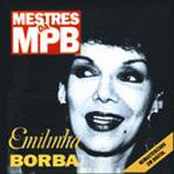
Mestres da MPB
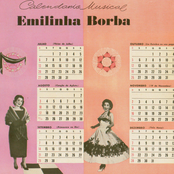
Calendário Musical
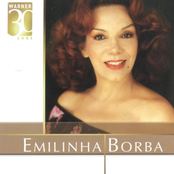
Warner 30 Anos
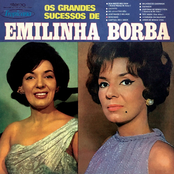
Os Grandes Sucessos de Emilinha Borba
▥
Chiquita Bacana
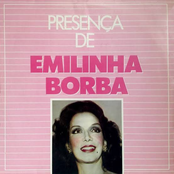
Presença - Emilinha Borba
▥
Marcha do Remador (Se a Canoa Não Virar Eu Chego Lá )
▥
Meus Primeiros Anos
▥
Emilinha Borba
▥
Frente a frente
▥
Marchinhas de Carnaval, Vol. 2
▥
Marcha do Remador (Se a Canoa Não Virar Eu Chego Lá )