Loading details…

Artist
T.S. Eliot
12+ albums
poetryspoken wordpoetmodernismmelancholy
about
Thomas Stearns Eliot, OM (September 26, 1888 – January 4, 1965) was an American-born poet, dramatist, and literary critic, whose works, such as The Love Song of J. Alfred Prufrock, The Waste Land, and Four Quartets, are considered defining achievements of twentieth century Modernist poetry. In 1948 he won the Nobel Prize for literature. Eliot made his home in London. After the war, in the 1920s, he would spend time with other great artists in the Montparnasse Quarter in Paris, where he was photographed by Man Ray. French poetry was a particularly strong influence on Eliot's work, in particular Charles Baudelaire, whose clear-cut images of Paris city life provided a model for Eliot's own images of London. He dabbled early in the study of Sanskrit and eastern religions and was a student of G. I. Gurdjieff. Eliot's work, following his conversion to Christianity and the Church of England, is often (always?) religious in nature and also tries to preserve historical English and broadly European values that Eliot thought important. In 1928, Eliot summarised his beliefs well when he wrote in the preface to his book For Lancelot Andrewes that "The general point of view [of the book's essays] may be described as classicist in literature, royalist in politics, and anglo-catholic in religion." User-contributed text is available under the Creative Commons By-SA License; additional terms may apply.
top songs
albums
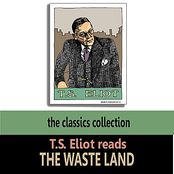
T.S. Eliot Reads The Waste Land
▥
The Waste Land
T.S. Eliot Reading Poems and Choruses - The 1955 London Caedmon Readings
▥
Salon Audio
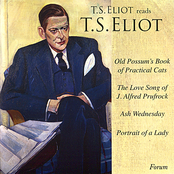
T.S. Eliot reads T.S. Eliot - 'Old Possum's Book of Practical Cats' and other poems
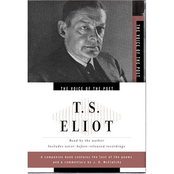
The Voice Of The Poet
Waste Land
▥
Great Poets of the 20th Century
▥
Waste Land - Read By T.S. Eliot
T.S. Eliot Reading Poems & Choruses
T.S. Eliot Reads Prufrock and Other Observations
Four Quartets