Loading details…

Artist
Roman de Fauvel
12+ albums
early musicmedievaltroubadourmedieval folk
about
Roman de Fauvel was written by several authors in 14 century between 1310 and 1316, the Roman de Fauvel is a virulent pamphlet against the corruption that reigned at the royal court of France, and at the Papal court in Avignon. But the story of the donkey Fauvel is also a fascinating manifesto concerning music and literature at the dawn of the fourteenth century. All the main genres current at the time are to be found in it, mixed together in a most appealing way. There are gregorian chants, and complex motets of the Ars Nova, not to mention courtly love songs, and scatological street cries. First published in Paris in 1314, the piece serves as an allegorical criticism of church and state, using the metaphor of a donkey becoming the ruler of his master's house upon a kind whim from Dame Fortune. The poem, though banned at the time for being seditious and heretical, was wildly successful and still copied into the 15th century. Twelve manuscripts have survived, many of which are in remarkably good condition, because they were stowed away securely due to their illegality. Following in the literary tradition of the thirteenth century, the Roman de Fauvel is often compared with the Roman de la Rose. User-contributed text is available under the Creative Commons By-SA License; additional terms may apply.
top songs
albums
▥
A Revolution in the Late Middle Ages
▥
Music From the Time of the Crusades
▥
Eloge du vin et de la vigne de Rabelais à Henri IV
▥
Music from the time of the Crusades (1096 - 1270)
▥
Roman de Fauvel
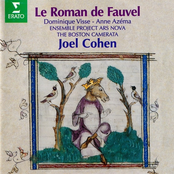
Le Roman De Fauvel
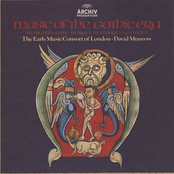
Music Of The Gothic Era
▥
Music from the time of the Crusades (CD-1)
▥
Instrumental Music From The Middle Ages CD3
▥
Eloge du vin et de la Vigne
▥
Jagged Little Pill
▥
CD3 - Roman De Fauvel