Loading details…

Artist
Roberto Szidon
12+ albums
classical pianoClassicalpiano solopianoliszt
about
Roberto Szidon (21 September 1941 – 21 December 2011) was a Brazilian classical pianist who had an international performing and recording career, and settled in Germany. Roberto Szidon was born in Porto Alegre, Brazil in 1941. He gave his first concert at age 9, in his home town of Porto Alegre. He then studied composition with Karl Faust, and continued his pianistic studies in the United States with Ilona Kabos and Claudio Arrau. He played with many renowned orchestras. He was the soloist at the premiere of Camargo Guarnieri's Piano Concerto No. 4, in Porto Alegre, on 6 September 1972. As a recording artist, he was best known for his complete recording of the 10 Piano Sonatas and the Fantaisie in B minor by Alexander Scriabin and his complete recording of the 19 Hungarian Rhapsodies and the Rhapsodie espagnole by Franz Liszt. He recorded a prize-winning LP in 1965 of Heitor Villa-Lobos's Rudepoêma. Other Villa-Lobos works in his discography were A fiandeira, Saudades dos selvas brasileiras, New York Skyline (1957 version), Carnaval dos crianças, A lenda do caboclo, Suite floral, Op. 97 (1949 revision), and 16 Cirandas and 12 Cirandinhas. He also recorded the works of other Brazilian composers such as Ernesto Nazareth, Francisco Mignone and Chiquinha Gonzaga. He also recorded Sergei Rachmaninoff's 2nd Sonata, Sergei Prokofiev's 6th Sonata, and George Gershwin's Concerto in F. He accompanied Thomas Quasthoff in Robert Schumann's Dichterliebe, Liederkreis, Op. 39, and othe
why this is interesting
# Roberto Szidon This pianist's career invites reflection on the bridge between Brazilian musical identity and European classical tradition. Szidon's training under Claudio Arrau and his commissioning role in premiering Camargo Guarnieri's work suggest an artist navigating two distinct musical worlds with intentionality. His choice to settle in Germany while maintaining connections to Brazilian composition reveals questions worth examining: how does a performer honor regional artistic heritage within international concert life? His recordings offer a window into mid-twentieth-century interpretive approaches, providing listeners curious about pianist philosophy during a transformative era an opportunity to listen closely.
top songs
1
Hungarian Rhapsody No.2
5932Liszt: Hungarian Rhapsody No.2 in C sharp minor, S.244
3063Liszt: Hungarian Rhapsody No. 2 in C Sharp Minor, S. 244
1694Ciranda nº1. Teresinha de Jesus
1375Hungarian Rhapsody No. 2 in C Sharp Minor, S. 244
1236Rhapsodie espagnole, S. 254
1217Hungarian Rhapsody No.6 in D flat, S.244
1208Hungarian Rhapsody No.2 in C sharp minor, S.244
1169Ciranda nº10. O Pintor de Canaí
9810I. Allegro agitato
94albums
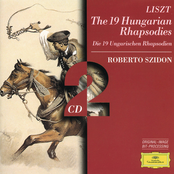
Liszt: Hungarian Rhapsodies
Heitor Villa-Lobos: Cirandas e Cirandinhas
▥
Franz Liszt - Passion For Piano
▥
Rachmaninoff: Piano Sonata No. 2 in B-Flat Minor, Op. 36 / Scriabin: Piano Sonata No. 4 in F-Sharp Major, Op. 30 / Prokofiev: Piano Sonata No. 6 in A Major, Op. 82
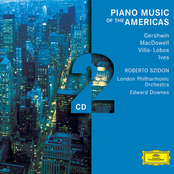
Piano Music Of The Americas
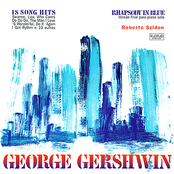
George Gershwin Centennial Edition
▥
Scriabin: Complete Piano Sonatas
▥
100 Anos de Piano Brasileiro
▥
The Liszt Collection
▥
Hollywood Classics: Music From The Movies
▥
Study: 111 Pieces Of Classical Music While You Work
▥
A Piano Weekend