Loading details…

Artist
Milton Babbitt
12+ albums
contemporary classicalexperimentalAvant-GardeClassicalamerican
about
Composer Milton Babbitt's influence on contemporary music is inestimable. His innovative use of the human voice, his infusions of electronic tape sounds into live performances, his serial compositional techniques and pioneering work in synthesized sound, all broke new ground in the music world. His compositions, with their twelve-tone structures, complex mathematical tonal combinations, and synthetic sounds, offered up with Babbitt's cerebral explanations, evince serious purpose, energy, and wit. His influence has been achieved as much through his extensive writings on music as through his music itself. His relative lack of concern with audience appeal is perhaps itself one of the keys to his success, giving him the freedom to experiment. In an article titled "Who Cares If You Listen?" (1958), Babbitt describes the modern-day composer of "new" music as a highly advanced specialist, an ivory-tower figure comparable to a closeted research scientist, who's first responsibility is the advancement of his or her art, and in whom the general music-loving public, quite understandably and properly, has and can have little interest. Born in Philadelphia in 1916, Babbitt studied composition with Marion Bauer and Philip James at New York University (B.A., 1935), and privately with Roger Sessions. When Sessions took a teaching position at Princeton University, Babbitt followed him there. He continued his studies--earning, in 1942, an M.F.A. in music--and himself joined the Princeton facu
top songs
albums
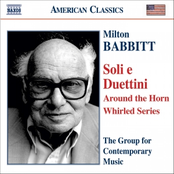
BABBITT, Milton: Around the Horn / None but the Lonely Flute
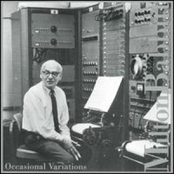
Early Gurus Of Electronics
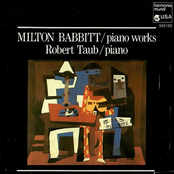
Milton Babbitt: Piano Works
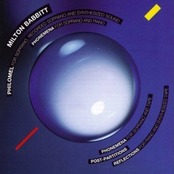
Milton Babbitt: Philomel
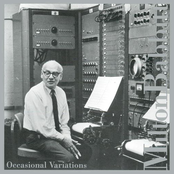
Occasional Variations
OHM: The Early Gurus of Electronic Music
BABBITT: Soli e Duettini
philomel
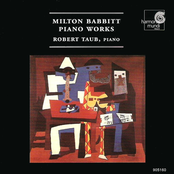
Piano works
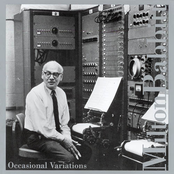
Babbitt Music
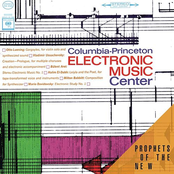
Columbia-Princeton Electronic Music Center
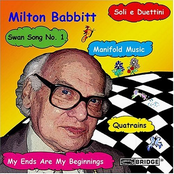
The Music of Milton Babbitt