Loading details…

Artist
Helmut Lachenmann
12+ albums
contemporary classicalAvant-Gardeexperimentalgerman20th Century
about
Lachenmann was born in Stuttgart. He studied piano with Jürgen Uhde and composition and theory with Johann Nepomuk David at the Stuttgarter Musikhochschule from 1955 to 1958 and was the first private student of Luigi Nono in Venice from 1958 to 1960. From Nono, he acquired the belief that music should aim to serve a message of social relevance. He also worked briefly at the electronic music studio at the University of Ghent in 1965, but thereafter focused almost exclusively on purely instrumental music. Lachenmann lived in Munich from 1960, and later moved to Stuttgart. Besides his activities as a composer and pianist, he also taught at various institutions during this period. In 1972 he taught composition for a year at the Basle Musikakademie, and from then on his teaching duties frequently took him abroad. In 1976 he was appointed professor of music theory and aural training at the Staatliche Hochschule für Musik und Theater, Hanover, a post he held until 1981, when he took a chair in composition (and, until 1988, music theory) at the Stuttgart Musikhochschule. He was awarded the Ernst von Siemens music prize in 1997. Only two pieces written during Lachenmann's period of study at the Stuttgart Musikhochschule have found their way into his catalogue of works: the piano cycle Fünf Variationen über ein Thema von Franz Schubert (1956–7) and the Rondo (1957) for two pianos, dedicated to his teacher David. In the Schubert variations Lachenmann does not adopt a Schubertian mode
top songs
albums
Kontrakadenz
Streichquartette
Mouvement, ...zwei gefühle..., Consolation I und II
Das Mädchen mit den Schwefelhölzern
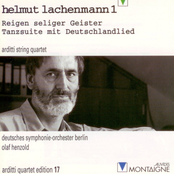
Reigen Seliger Geister - Tanzsuite Mit Deutschlandlied
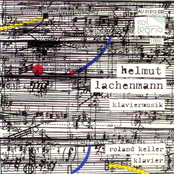
Klaviermusik
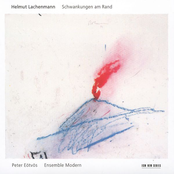
Schwankungen Am Rand
An anthology of noise and electronic music vol. 5 - fifth a-chronology 1920-2007
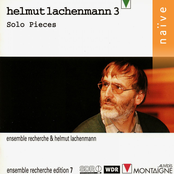
Helmut Lachenmann: Solo Pieces
Lachenmann: Das Mädchen mit den Schwefelhölzern
Linkages - Piano music by Brahms, Wagner, Schönberg a.o.
Helmut Lachenmann: Musique Concrète