Loading details…

Artist
Michelagnolo Galilei
7+ albums
italian17th century
about
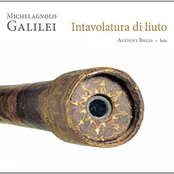
Michelagnolo Galilei (18 December 1575 – 3 January 1631) was an Italian lutenist and composer who worked at the hinge between late Renaissance idioms and early Baroque style, and whose surviving music is centred on a single substantial printed collection. Born in Florence, he was the son of the theorist and lutenist Vincenzo Galilei and the younger brother of Galileo Galilei. After Vincenzo’s death in 1591, Michelagnolo’s early professional prospects became entangled with family circumstance, and open biographical summaries place him first in northern Italy and then, still very young, in the wider European market for foreign virtuosi. He is reported to have travelled to the Polish–Lithuanian Commonwealth in the 1590s, a region with strong demand for imported Italian musicians, before later establishing himself in Munich at the Bavarian court, where he remained for the rest of his life. The later phase of his biography is especially well illuminated by surviving correspondence with Galileo, which modern narratives describe as increasingly fraught, with repeated requests for financial support. Galilei’s secure compositional legacy is dominated by music for ten-course lute published in Munich in 1620 as Il primo libro d’intavolatura di liuto, a collection explicitly presenting him as a Florentine nobleman and lutenist in the service of Duke Maximilian of Bavaria, and containing a wide range of genres—toccatas, galliards, correntes, voltas, passamezzi, and saltarellos—assembled
top songs
1
Sonate in Fa Minore: I. Toccata
3942Sonate in Fa Minore: III. Volta
453Sonate in Fa Minore: II. Corrente
454Sonate in Do Minore: I. Toccata
425Sonate in Do Minore: IV. Corrente 3
416Sonate in Fa Minore: IV. Passamezo
407Sonate in Fa Minore: V. Saltarello
398Sonate in Si Bemolle Maggiore: IV. Volta 2
379Sonate in Do Minore: III. Corrente 2
3710Sonate in Do Minore: VI. Saltarello
35