Loading details…

Artist
Giovanni da Firenze
12+ albums
italianmedievalearly musictrecento14th century
about
Giovanni da Cascia, also Jovannes de Cascia, Johannes de Florentia, Maestro Giovanni da Firenze, was an Italian composer of the medieval era, active in the middle of the fourteenth century. Virtually nothing is known about Giovanni's life. From his surname it is presumed that he was born in the village of Cascia, near Florence. It was once thought that he held a post at Florence Cathedral, but this is no longer accepted. A Florentine chronicle states that Giovanni and Jacopo da Bologna competed at Mastino II of Scala's court; Mastino died in 1351. The metaphors used in his works are consistent with prevailing idioms of the mid-14th century. His portrait in the Squarcialupi Codex shows him without priestly garments. Nineteen of Giovanni's compositions survive, scattered in nine manuscripts. Sixteen of these are madrigals, and three of them are cacce. He is thought to have written some of his own texts. Musically, Giovanni's madrigals are of importance in the development of the style of the 14th-century madrigal. He tends to use extended melismas on the first and penultimate syllables of a poetic line, and sometimes introduces hockets at these points. The middles of the lines are generally syllabic. Many of his works are very similar in style to the anonymous works preserved in the Rossi Codex. Several of his works survive in quite different versions; this is evidence that improvisation was still an important aspect of musical performance up to this time. Giovanni's works te
top songs
albums
▥
Monastic Chant - 12th & 13th Century European Sacred Music
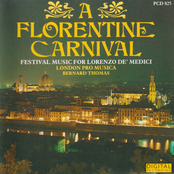
A Florentine Carnival
Bestiarium
O tu chara sciença: La musique dans la pensée médiévale
Knights, Maids and Miracles: The Spring of Middle Ages
▥
Early Music Festival, Florentine Music of the Fourteenth Century, Early Music Consort of London Disc 1
▥
Bestiaruim
Two Gentlemen of Verona
En Seumeillant
Landini e la musica fiorentina
Ecco La Primavera
Medieval Music