Loading details…

Artist
Antonio Giannettini
5+ albums
italian17th century
about
Antonio Gianettini (also Giannettini, Zanettini, Zannettini; 1648 – 12 July 1721) was an Italian organist, concertmaster and composer. Born in Fano, almost nothing is known about Gianettini's musical training; in 1662, sources place him in Venice, where he probably studied under the guidance of Sebastian Enno. On 14 January 1674 he was admitted as a bass singer in the choir of the chapel of the Basilica of San Marco. Subsequently, on 5 December 1676 he was appointed as an organist at the Basilica of Santi Giovanni e Paolo with a salary of 40 ducats a year (a position he held until 1679). In this period he studied music with Carlo Grossi and perhaps also with Giovanni Legrenzi. On 25 January 1677 he was also an organist at San Marco (while being a choir singer). From 1676 he started to be active as a composer: in this period he wrote about ten works in Venice and Milan and various sacred music (including some motets for Ippolito Bentivoglio). During years 1685-1686 he was also active as a composer and a capella teacher for the Duke of Hannover Ernesto Augusto of Brunswick-Lüneburg. While there, he stayed in a building overlooking the Grand Canal. On May 1, 1686, Gianettini left his offices at San Marco to take the place of maestro di cappella at the court of Francesco II, Duke of Modena. His salary for his services to the court of Modena was 396 lire a month (a considerable amount for the time). For the Duke's court he wrote 9 oratorios, but also other sacred compositions, c
top songs
1
L'ingresso alla gioventù di Claudio Nerone: Languia d'amor
342L'ingresso alla gioventù di Claudio Nerone: Con un bacio
333L'ingresso alla gioventù di Claudio Nerone, Act III Scene 8: Fra l'horror d'ombre terribili (Aspasio)
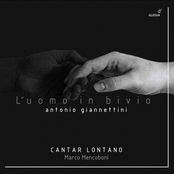
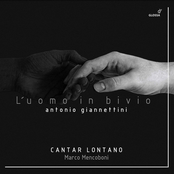
74L'uomo in bivio, Pt. 1: No. 1, Sinfonia
65L'uomo in bivio, Pt. 1: No. 2, Da la Reggia Superna
56L'uomo in bivio, Pt. 1: No. 7, Quand'a indorar
57L'uomo in bivio, Pt. 1: No. 3, Oh dal fiato di Dio
58L'uomo in bivio, Pt. 1: No. 4, Mortali, alla gloria!
59L'uomo in bivio, Pt. 1: No. 5, Sprezza dunque la terra
510L'uomo in bivio, Pt. 1: No. 6, Queste note amorose
5