Loading details…

Artist
Ângela Maria
12+ albums
brazilbrasilrio de janeirotangompb
about
Ângela Maria (Abelim Maria da Cunha, Macaé, RJ, 13 May 1929 – 30 September 2018) was a Brazilian singer and actress. She was elected "Queen of the Radio" in 1954 and was considered the most popular singer of that decade in Brazil. Owner of a privileged voice and personal style of interpretation, Maria is regarded by many as the best singer of all time in that country, and successive musical movements such as bossa nova, Tropicália, and Jovem Guarda never succeeded in disturbing her career. The daughter of a Protestant minister, she sang in church choirs from her childhood. She worked as a weaver, as her family was against her artistic wishes. Around 1947, she began to perform in radio, in novice shows like Pescando Estrelas (Rádio Clube do Brasil), Hora do Pato (Rádio Nacional), and in Ary Barroso's show on Rádio Tupi. Always using the pseudonym Ângela Maria (which occulted her performances from her strict family), she performed as an amateur in the famous Trem da Alegria (by Lamartine Babo, Iara Sales, and Héber Bôscoli) on Rádio Nacional. The listeners' good reception encouraged her to abandon her family and to try the career of singer. In 1948, she became the crooner of the Dancing Avenida, one of the most important gafieiras of Rio. Soon, she was hired by Rádio Mayrink Veiga. Her first recording came in 1951, with "Sou Feliz" (Augusto Mesquita/Ciro Monteiro) and "Quando Alguém Vai Embora" (Ciro Monteiro/Dias Cruz), for Victor. "Não Tenho Você," by then-unknown composer
top songs
albums
▥
Ode Descontínua e Remota Para Flauta e Oboé. De Ariana Para Dionísio
Pasión de Gavilanes
▥
Os Grandes Sambas da História
16 Seleções de Sucessos
Amigos
Ângela
▥
Coleção Folha Raízes da Música Popular Brasileira Vol. 12: Dorival Caymmi
▥
Meus Primeiros Passos e Compassos
▥
Focus
▥
Ângela Maria
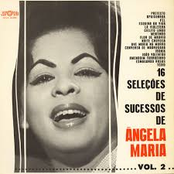
16 Seleções de Sucessos Vol. 2
▥
Angela