Loading details…

Artist
William Lawes
12+ albums
baroqueClassicalrenaissancecomposerenglish
about
William Lawes (1602–1645) was an English composer and musician. Lawes was born at Salisbury in Wiltshire and was baptised on 1st May 1602. He was the son of Thomas Lawes, a vicar choral at Salisbury Cathedral, and brother to Henry Lawes, a very successful composer in his own right. His patron, Edward Seymour, Earl of Hertford, apprenticed him to the composer John Coprario, which probably brought Lawes into contact with Charles, Prince of Wales at an early age. Both William and his elder brother Henry received court appointments after Charles succeeded to the British throne as Charles I. William was appointed as "musician in ordinary for lutes and voices" in 1635 but had been writing music for the court prior to this. William Lawes spent all his adult life in Charles's employ. He composed secular music and songs for court masques (and doubtless played in them), as well as sacred anthems and motets for Charles's private worship. He is most remembered today for his sublime viol consort suites for between three and six players and his lyra viol music. His use of counterpoint and fugue and his tendency to juxtapose bizarre, spine-tingling themes next to pastoral ones in these works made them disfavoured in the centuries after his death; they have only become widely available in recent years. When Charles's dispute with Parliament led to the outbreak of the Civil War, Lawes joined the Royalist army and was given a post in the King's Life Guards, which was intended to keep him o
top songs
albums
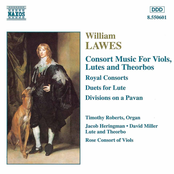
LAWES: Consort Music for Viols, Lutes and Theorbos
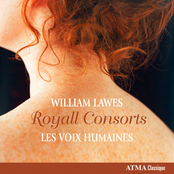
Lawes: Royall Consorts
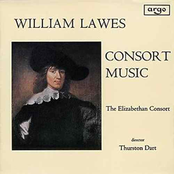
William Lawes - Consort Music
▥
Consort Music for Viols, Lutes, & Theorbos
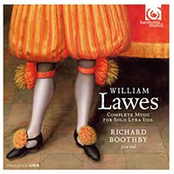
Lawes: Complete Music for Solo Lyra Viol
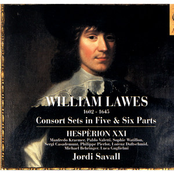
William Lawes: Consort Sets In Five & Six Parts
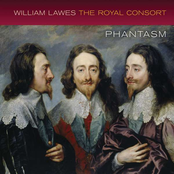
Lawes: The Royal Consort
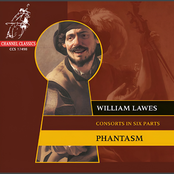
Lawes: Consorts In Six Parts
▥
Love I Obey
▥
English music for viols
▥
Lawes: Consorts in 4 and 5 Parts
▥
Together