Loading details…

Artist
William Faulkner
12+ albums
about
William Cuthbert Faulkner (September 25, 1897 – July 6, 1962) was an American novelist, film screenwriter, and poet whose works feature his native state of Mississippi. He is regarded as one of the most influential writers of the twentieth century and was awarded the 1949 Nobel Prize for Literature. Faulkner was known for an experimental style with meticulous attention to diction and cadence, in contrast to the minimalist understatement of his peer Ernest Hemingway. Although Faulkner is sometimes lauded as the inventor of the "stream of consciousness" technique in fiction, this is misleading. Other writers such as Henry James, James Joyce and Edouard Dujardin had used this technique before him. Along with Mark Twain, Tennessee Williams, and Truman Capote, Faulkner is considered one of the most important "Southern writers." While his work was published regularly from the mid 1920s to the late 1940s, he was relatively unknown before receiving the Nobel Prize in Literature in 1949. Critics and the public now favor his work,[1] and he is widely seen as among the greatest American writers of all time. User-contributed text is available under the Creative Commons By-SA License; additional terms may apply.
top songs
albums
▥
Light in August
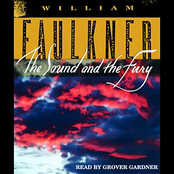
The Sound And The Fury
As I Lay Dying
▥
William Faulkner Reads From His Works: The Complete 1954 Caedmon Recordings
▥
The Complete Greatest Speeches & Moments Ever
▥
The Sound and the Fury (Unabridged)
▥
Historic Voices IX
▥
Absalom, Absalom! (Ungekürzte Lesung)
▥
Light in August (Unabridged)
▥
Absalom, Absalom! Disc 01
▥
As I Lay Dying Disc 1
▥
Collected Stories (Unb)