Loading details…

Artist
Vinicius de Moraes
12+ albums
Bossa Novampbbrasilbraziliansamba
about
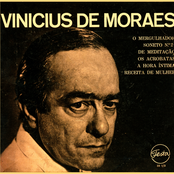
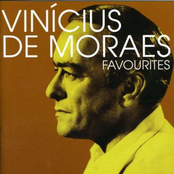
Vinicius de Moraes, o poetinha (“the little poet”), (October 19, 1913 — July 9, 1980), born Marcus Vinicius da Cruz de Melo Morais in Rio de Janeiro, Brazil, was a seminal figure in contemporary Brazilian music (mpb. As a poet, he wrote lyrics for a great number of songs that became all-time classics. He was also a composer, a playwright, a diplomat and, as an interpreter of his own songs, he left several important albums. From a musical family, Vinicius began writing poetry early in life. At the age of 14, he became friends with the brothers Paulo and Haroldo Tapajós and, with the latter, composed “Loura ou Morena”, his first song. In 1929, Vinicius enrolled in law school in Rio de Janeiro. Then, starting in 1932, he wrote lyrics for ten songs that were recorded by the Tapajós brothers. Upon completing his studies, he published his first two collections of poetry Caminho Para a Distância (1933) and Forma e Exegese. Later, in 1935, he became a cinema censor for the Ministry of Health and Education. During this time, he wrote his third book Ariana, a Mulher (1936). Vinicius then headed to England (1938) with an English government scholarship to study literature at Oxford University and while there he wrote Novos Poemas. At that time he was married by proxy. In 1941, during World War II, Vinicius returned to Rio and began to write film reviews and other pieces for newspapers and magazines. Two years later, he joined Brazil’s diplomatic service and released his book Cinco Eleg