Loading details…

Artist
Vincenzo Capirola
12+ albums
renaissanceClassicalearly musicitaliancomposer
about
Vincenzo Capirola (1474 – after 1548) was an Italian composer, lutenist and nobleman of the Renaissance. His music is preserved in an illuminated manuscript called the Capirola Lutebook, which is considered to be one of the most important sources of lute music of the early 16th century. He was probably from Brescia, and is known to have lived in that city for several periods of his life, although he was in Venice in 1517 and for some time after that, the period during which the illuminated manuscript was prepared. It is possible that Capirola is the famous Brescian lutenist who visited the court of Henry VIII of England, although his name was not recorded (no other virtuoso lutenists of the period, from Brescia, who were also noblemen, are known). The Lutebook contains the earliest known examples of legato and non-legato indications, as well as the earliest known dynamic indications [1]. The pieces vary from simple studies suitable for beginners on the instrument, to immensely demanding virtuoso pieces. There are also 13 ricercars in the book, which alternate passages in brilliant toccata style with passages in three-part counterpoint similar to that of the vocal music of contemporary composers such as Jacob Obrecht. In addition to music by Capirola (and others — Capirola evidently transcribed several pieces by other composers for the book), the Lutebook contains a preface which is one of the most important primary sources on early 16th century lute-playing. It includes in
top songs
albums
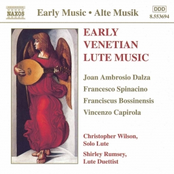
Early Venetian Lute Music
▥
Early Italian Lute Music
▥
Konrad Ragossnig - European Lute Music from England, Italy, Spain, Germany etc.
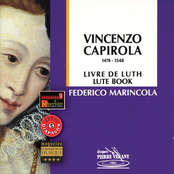
Capirola : Pièces de luth
▥
Music of the Italian Renaissance
▥
Works For Lute
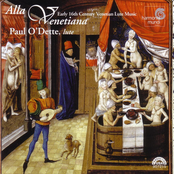
Alla Venetiana - Early 16th Century Venetian Lute Music
▥
Vocal Music (Italian 16Th Century) - Cimello, G. / Lassus, O. / Fontana, V. / Perissone, C. / Maio, G.T. / Donato, B. (Canzoni Villanesche)
▥
Early Music (The Glory of)
▥
The Glory of Early Music
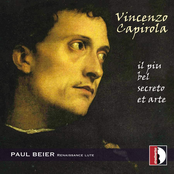
Il piu bel secreto et arte
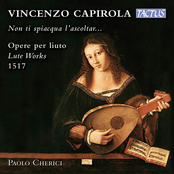
Lute Works, 1517