Loading details…

Artist
Vicente Lusitano
12+ albums
renaissanceClassical16th centuryportuguese
about
Vicente Lusitano (c. 1520 – c. 1561) was a Portuguese composer and theorist of the late Renaissance. He was possibly of African descent, and has a claim to being the first published black composer. Lusitano, which means "Portuguese", appears to be a nickname rather than a family name. He was born in Olivença, but little else is known for certain of his life, including the dates of his birth and death. Some information is recorded in the 18th century biography by Diogo Barbosa Machado: he came from Olivença, became a priest, and was employed as a teacher both at Padua and Viterbo. Very little of what Machado wrote about him has been verified by any other source, except the date of publication (1561) of a music theory treatise at Venice. He wrote a number of choral works, including Latin motets (published as Liber primus epigramatum que vulgo motetta dicuntur, 5, 6, 8vv, Rome, 1551) and a madrigal. In several works he references Josquin des Prez, who had died 30 years before. For example, he reworked des Prez' motet Inviolata, integra for more voices. Lusitano's music has been revived in recent years, for example by the Marian Consort. Before the revival he was better remembered for his work as a theorist. In a 1551 debate in Rome, he espoused traditional views on the role of the three genera in music (diatonic, chromatic and enharmonic) over more radical ones put forward by Nicola Vicentino (Lusitano was deemed to have won the debate). His Introduttione facilissima, et novi
top songs
albums
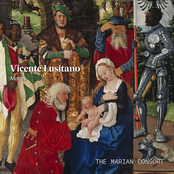
Vicente Lusitano: Motets
▥
Isti sunt due olive (Live Recording)
▥
Lusitano: Liber primus epigramatum
▥
Canções, Vilancicos e Motetes Portugueses
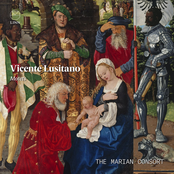
Motets
▥
Cancões, Vilancicos e Motetes Portugueses
▥
A Secret Labyrinth: A Celebration of Music from the Middle Ages to Renaissance
▥
Classic FM
▥
Liber primus epigramatum (1551)
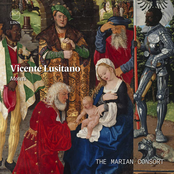
Vicente Lusitano - Motets
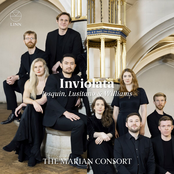
Inviolata
▥
Cancoes, Vilancicos e Motetes Portugueses (Huelgas Ensemble, Paul Van Nevel)