Loading details…

Artist
Tomás Marco
12+ albums
contemporary classicalcomposerspanishinstrumentalexperimental
about
Tomás Marco Aragón (born 12 September 1942 in Madrid) is a Spanish composer and writer on music. Marco studied violin and composition in Madrid while at the same time pursuing the study of law (he received his licenciate in law in 1963). He turned to composition in 1958, and in 1962 began attending the Darmstädter Internationale Ferienkurse, where he furthered his studies with Bruno Maderna, Pierre Boulez, Karlheinz Stockhausen, György Ligeti, Gottfried Michael Koenig, and Theodor W. Adorno. In 1967 he participated in Stockhausen’s collective composition project Ensemble at Darmstadt. His compositional style is rooted in the music of the Darmstadt School. For example, Transformación (1974) strongly recalls Ligeti’s Lux aeterna (1966)—both are composed for 16 solo voices—as well as the harmonic overtone-singing of Stockhausen’s Stimmung (1968). In 1965 he began a brief association with the neo-Dada composers’ group Zaj, founded the previous year by Walter Marchetti, Juan Hidalgo, and Ramón Barce (Haines 1967). He helped to found the Studio Nueva Generación in 1967 (Medina 2001), by which time some of his compositions were beginning to include references to historical styles and quotations from earlier composers—for example, Angelus novus (1971) refers to Gustav Mahler, the Cello Concerto (1976) is based on themes by Manuel de Falla as well as the Cant dels ocells by Pablo Casals, and his Fourth and Fifth Symphonies (1987 and 1989, respectively) both use a quotation from Rich
top songs
albums
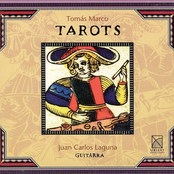
Marco, T.: Tarots
▥
Tomás Marco: Tarots
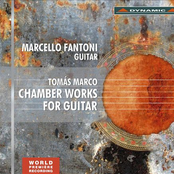
Marco: Chamber Works for guitar
▥
Music from the Age of Cosmonauts
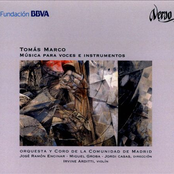
Tomás Marco: Música para voces e instrumentos
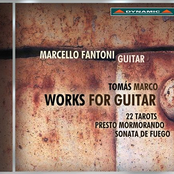
Marco: Works for Guitar
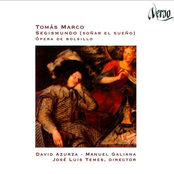
Tomás Marco: Segismundo (Soñar el sueño)
▥
Reflections on Spain
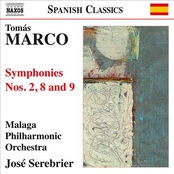
Marco: Symphonies Nos. 2, 8 & 9
▥
Imago Mundi
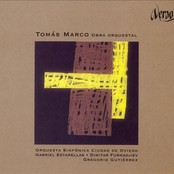
Tomás Marco: Obra orquestal
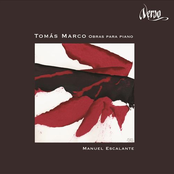
Tomás Marco: Obras para piano