Loading details…

Artist
Theo Mackeben
12+ albums
pianojazzgermanyoldies20s
about
Theo Mackeben, born 5 January 1897 in Preußisch Stargard, Westpreußen, died 10 January 1953 in Berlin, was a German pianist, conductor and composer, particularly of film music. Life and career From 1916 to 1920 Mackeben studied violin and piano at the Hochschule für Musik Köln, as well as taking lessons from Jules de Westheim. He then became active as a café and radio pianist during the 1920s, at the Café Größenwahn and the Hotel Esplanade in Berlin. In 1928 at the Theater am Schiffbauerdamm he conducted the first performance of Dreigroschenoper. Mackeben arranged the music from Millöckers operetta Gräfin Dubarry, for a 1931 production entitled Die Dubarry including an original song Ich schenk mein Herz nur dir allein. In the 1930s he composed music for stage plays and over 50 films, including some directed by Max Ophüls, Gustaf Gründgens and Willy Forst. After the war he wrote a piano concerto and a Sinfonische Ballade for cello and orchestra, while also being conductor at the Metropol-Theater. Recordings As conductor, Mackeben's recordings from the late 1920s through the 1930s include extracts from Dreigroschenoper and Die Dubarry, Scassola's Laendische Suite, Mendelssohn's 'Spring Song', and fantasies from Smetana's Bartered Bride, Zeller's Der Vogelhändler, Verdi's La traviata, Weill's Mahogony and Suppé's Die schöne Galathee, on labels such as Telefunken and Berlin. A selection of Mackeben's music was recorded by the WDR Symphony Orchestra Cologne conducted by Em
top songs
1
Bell Ami
1252Bei Dir War Es Immer So Schön
483Frauen Sind Keine Engel
384Anita und der Teufel: Bei dir war es immer so schon
375Bel Ami
346Bel Ami: Du hast Gluck bei den Frau'n
347San Francisco
348Das Leben beginnt erst, wenn man verliebt ist
299Anita und der Teufel (excerpts): Wenn mein kleiner Teddybar
2910Schlummerlied
28albums
▥
Suite Française (Original Motion Picture Soundtrack)
▥
Mackeben, T.: Film Music (1929-1945)
▥
Mackeben, T.: Songs and Film Melodies
▥
Die Liebe kommt, die Liebe geht
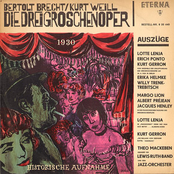
Kurt Weill: Die Dreigroschenoper (Berlin, 1929)
▥
Kurt Weill
▥
Icons of German Cinema: Zarah Leander in Stockholm, Vol. 2 (1930-1952)
▥
Dreigroschenoper
▥
Cello Quartet Arrangements - Handy, W.C. / Arlen, H. / Mayfield, P. / Ellington, D. / Winner, J.E. / Mackeben, T.
▥
Millöcker: Die Dubarry
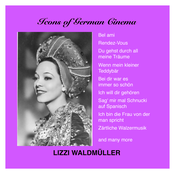
Highlights of German Cinema: Lizzi Waldmüller (1930-1942)
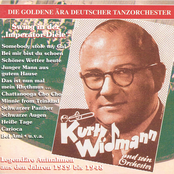
The Golden Era of the German Dance Orchestra: Swing in der Imperator Diele (1939 - 1948)