Loading details…

Artist
The Merry Macs
12+ albums
AllUSABig BandFUCKING AWESOMEShady
about
The Merry Macs were an American close-harmony pop music quartet active from the 1920s till the 1960s and best known for the hits “Mairzy Doats,” “Praise the Lord and Pass the Ammunition” and "Sentimental Journey." They also sang on recordings with Bing Crosby. Formed to play proms in Minneapolis, Minnesota, the group originally consisted of the three McMichael brothers: tenors Judd (1906-1989) and Joe (1916-1944), and baritone Ted (1908-2001). They were discovered by singer-bandleader Eddie Dunstedter. In 1930 the McMichaels, after performing as The Mystery Trio and The Personality Boys, added a female lead singer, Cheri McKay, and changed their name to The Merry Macs. In 1936 they appeared on several national radio programs, and Cheri McKay was replaced by Helen Carroll. (McKay trained her successor in the group's singing style.) Vocal quartets had customarily harmonized like barbershop quartets. The Merry Macs revolutionized vocal harmony with closer harmonic chords. This style inspired other groups, like The Modernaires and Six Hits and a Miss. In 1938 The Merry Macs signed with Decca Records and recorded “Pop Goes the Weasel.” The Merry Macs (with Carroll) sang a swing version of "Down by the Old Mill Stream" in the 1939 Vitaphone musical Seeing Red, Red Skelton's first film. In 1939 Mary Lou Cook (b. 1910) replaced Helen Carroll. This is the foursome that most listeners know from film appearances. The McMichael brothers and Cook appeared as a specialty act in Hollywo
top songs
albums
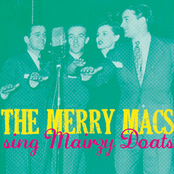
The Merry Macs Sing Mairzy Doats
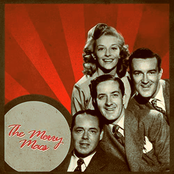
Presenting The Merry Macs
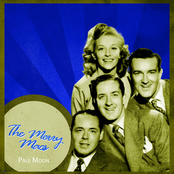
Pale Moon

The Original Songs Uncovered (Tracks Inspired By Bioshock Infinite)
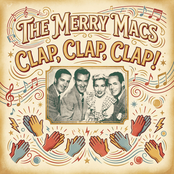
Clap, Clap, Clap!
Classic Years of The Merry Macs
▥
Great Hits of the 30's & 40's
▥
Songs from Woody Allen' Films
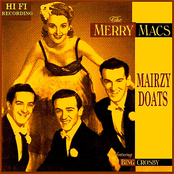
The Merry Macs
▥
The 50 Best Hit Songs of the 1940s
▥
100 Gold Jazz Hits

Mairzy Doats