Loading details…

Artist
The Five Red Caps
12+ albums
about
The Five Red Caps began in 1940 Los Angeles, moving to New York in search of fame and fortune and were one of the most prolific and influential groups of the 1940s and 1950s. They had releases on many labels, using many names and featuring diverse personnel. In mid-1943 the 4 Toppers changed their name to the 5 Red Caps and signed with the legendary producer Joe Davis. Romaine Brown said that the name had a catchy sound and it "sounded black," like the "Ink Spots." Red caps (the traditional headgear of baggage handlers on trains and planes) were rarely worn by the group (possibly only for some photo sessions, during a show at Loew's State Theater, and in a 1949 movie). Springs said that another reason for the name change was to get around the recording ban imposed at that time by the American Federation Of Musicians (the first Petrillo Ban). No union musician was permitted to make records between August 1, 1942 and November of 1943. The Red Caps name was intended as a coverup, since all the members belonged to the union and shouldn't have been recording. But it was soon discovered by the union, which fined the group. User-contributed text is available under the Creative Commons By-SA License; additional terms may apply.
top songs
albums
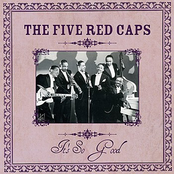
It's So Good
▥
The Definitive R&B Series – 1944
▥
The History of Rhythm & Blues Part Two: 1942-1952 Vol. 1
▥
The History of Rhythm & Blues Part Two: 1942-1952, Vol. 1
▥
The History of Rhythm and Blues - Disc 1
▥
The Five Red Caps - 1943-45
▥
Blowing The Fuse: 26 R&B Classics That Rocked The Jukebox In 1945

Tuscaloosa
▥
Words Can't Explain
▥
Monkey And The Baboon
▥
1943-45
▥
The Complete Story Of Doo Wop Volume 1: 1939-1949