Loading details…

Artist
The Dixon Brothers
12+ albums
folkbluegrassbluesUSAtraditional
about
Dorsey Dixon and his brother Howard Dixon were 2 amongst 7 total siblings, all poor mill workers by the time they reached their teen years in North & South Carolina. Dorsey Dixon did not start writing his own rural folk songs until age 32, but songs like "Weaver's Life", "Factory Girl", "Babies in the Mill", "The School House Fire" and "Spinning Room Blues" were infused with struggles of the poor workers in the southern textile mills, and were later rediscovered by labor & song historians. The brothers moved from performing their music at local jamborees into a professional career in 1934 via the WBT Saturday Night Jamboree radio show out of Charlotte NC. On 12 Feb. 1936, they had their first recording session for RCA Victor. Over the next two years there were six more sessions in which almost 60 songs were recorded, including twelve songs in which Dorsey's then wife Beatrice Dixon sat in. They attributed their singing success in the midst of the great depression to the lord's providence, When their contracts ran out about the time WWII started, they returned to millwork. When Roy Acuff had a huge hit with "Wreck on the Highway" in 1942, no one noticed or cared that it was actually a rework of the Dixon Brothers' own 1938 song "I Didn't Hear Anybody Pray," Embittered by their experiences in the music business, the two brothers rarely performed again professionally, except in their local church in the 1950's. "I'm trying to serve the Lord in my weak way and trying to
top songs
albums
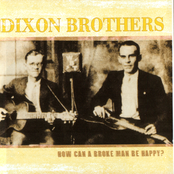
How Can A Broke Man Be Happy?
▥
People Take Warning 1: Man Vs. Machine
▥
Dixon Brothers Vol. 2 (1937)
▥
Down In The Basement: Joe Bussard's Treasure Trove of Vintage 78s
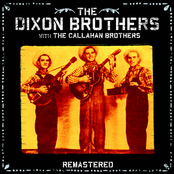
The Dixon Brothers with The Callahan Brothers
▥
Gimme Dat Harp Boy - Roots of The Captain
▥
YETI SIX Comp
▥
Down In The Basement: Joe Bussard's Treasure Trove Of Vintage 78s: 1926-1937
Weaver's Life
▥
High Rollers - Vintage Gambling Songs - 1920 - 1952
▥
The Very Best Of (1934-1939)
▥
Dixon Brothers, Vol. 2: 1937