Loading details…

Artist
Sonny Boy Williamson I
12+ albums
bluesdelta bluesRocking bluesdouble-enderdouble-ender 4
about
John Lee Curtis "Sonny Boy" Williamson (March 30, 1914 – June 1, 1948) was an American blues harmonica player and singer, and the first to use the name Sonny Boy Williamson. Biography and career Williamson was born near Jackson, Tennessee in 1914. His original recordings were considered to be in the country blues style, but he soon demonstrated skill at making harmonica a lead instrument for the blues, and popularized it for the first time in a more urban blues setting. He has been called "the father of modern blues harp". While in his teens he joined Yank Rachell and Sleepy John Estes playing with them in Tennessee and Arkansas, and in 1934 settled in Chicago. Early recordings Sonny first recorded for Bluebird Records in 1937 and his first recording, "Good Morning, School Girl", became a standard.[1] He was hugely popular among black audiences throughout the southern United States as well as in the midwestern industrial cities such as Detroit and his home base in Chicago, and his name was synonymous with the blues harmonica for the next decade. Other well-known recordings of his include "Sugar Mama Blues", "Shake the Boogie", "You Better Cut That Out", "Sloppy Drunk", "Early in the Morning" and "Stop Breaking Down" and "Hoodoo Hoodoo" aka "Hoodoo Man Blues". In 1947 "Shake the Boogie" made #4 on Billboard's Race Records chart.[1] Williamson's style influenced a large number of blues harmonica performers, including Billy Boy Arnold, Junior Wells, Sonny Terry, Little Walte
top songs
albums
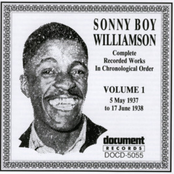
Sonny Boy Williamson Vol. 1 (1937 - 1938)
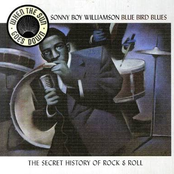
Bluebird Blues - When The Sun Goes Down Series
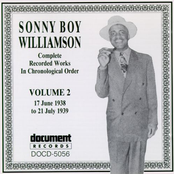
Sonny Boy Williamson Vol. 2 (1938-1939)
▥
Martin Scorsese Presents The Blues - A Musical Journey (Disc 2)
▥
The Bluebird Recordings, 1938
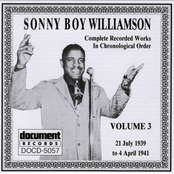
Sonny Boy Williamson Vol. 3 (1939 - 1941)
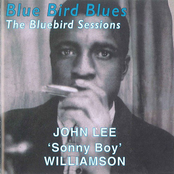
Blue Bird Blues
▥
The Blues At Christmas 2 (The Blues Collection)
▥
The Bluebird Recordings 1937-1938
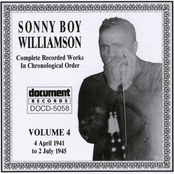
Sonny Boy Williamson Vol. 4 (1941 - 1945)
▥
The Original (Box Set)
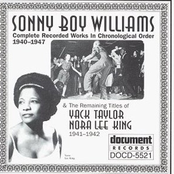
Sonny Boy Williams (1940-1947)