Loading details…

Artist
Sidney Bechet And His Blue Note Jazz Men
12+ albums
about
Sidney Bechet (May 14, 1897 – May 14, 1959) was an American jazz saxophonist, clarinetist, and composer. He was one of the first important soloists in jazz (beating cornetist and trumpeter Louis Armstrong to the recording studio by several months[1] and later playing duets with Armstrong), and was perhaps the first notable jazz saxophonist. Forceful delivery, well-constructed improvisations, and a distinctive, wide vibrato characterized Bechet's playing. Bechet's erratic temperament hampered his career, however, and not until the late 1940s did he earn wide acclaim. Bechet (pronounced BAH-shay by the family, most commonly pronounced buh-SHAY) was born in New Orleans to a wealthy Creole family. "Discovered" at the age of six, Sidney Bechet quickly learned the clarinet by picking up his brother's horn and teaching himself. At a family birthday party, Bechet debuted his newly acquired talents. Later in his youth, Bechet studied with such renowned Creole clarinetists as Lorenzo Tio, "Big Eye" Louis Nelson, and George Baquet. Soon after, Bechet would be found playing in many New Orleans ensembles, improvising with what was "acceptable" for jazz at that time (obbligatos, with scales and arpeggios). These ensembles included parade work with Henry Allen's celebrated Brass Band, the Olympia Orchestra, and John Robichaux's "genteel" dance orchestra. In 1911-1912, he performed with Bunk Johnson in the Eagle Band of New Orleans, and in 1913-1914, with King Oliver in the Olympia Band.[
top songs
albums
▥
Ken Burns Jazz Series: Sidney Bechet
▥
The Smithsonian Collection Of Classic Jazz, Vol. 1
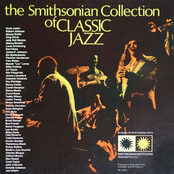
The Smithsonian Collection of Classic Jazz
▥
Smithsonian Collection Of Classic Jazz Volume I
▥
Cool Blues
▥
Ken Burns Jazz: Sidney Bechet
▥
Smithsonian Collection of Classic Jazz
▥
Jazz Café Essentials - 50 Original Recordings
▥
The Smithsonian Collection of Classic Jazz Volume I
▥
The Smithsonian Collection of Classic Jazz, Volume 1
▥
Sydney Bechet Runnin'
▥
The Smithsonian Collection of Classic Jazz (Revised) - Volume I