Loading details…

Artist
Shorty Rogers and His Giants
12+ albums
jazzsaxophonesaxeverythingjazz saxophone
about
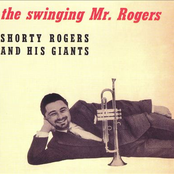
Shorty Rogers (April 14, 1924 – November 7, 1994) was one of the principal creators of West Coast jazz. He played both the trumpet and flugelhorn, and was in demand for his skills as an arranger. From 1953 through 1962 Rogers recorded a series of RCA Victor albums (later reissued under the Bluebird label) and Atlantic albums with his own group, Shorty Rogers and His Giants, including Shorty Courts the Count (1954), The Swinging Mr. Rogers (1955), and Martians Come Back (1955), the album title alluding to the tune "Martians Go Home" which Rogers had composed and performed on The Swinging Mr. Rogers earlier the same year. These albums incorporated some of his more avant-garde music. To some extent they could be classified as "cool" jazz; but they also looked back to the "hot" style of Count Basie, whom Rogers always credited as a major inspiration. Rogers worked first as a professional musician with Will Bradley and Red Norvo. From 1947 to 1949, he worked extensively with Woody Herman and in 1950 and 1951 he played with Stan Kenton. Rogers appeared on the 1954 Shelly Manne album The Three and the Two along with Jimmy Giuffre. Much of the music he recorded with Giuffre showed his experimental side, resulting in an early form of avant-garde jazz. He also made notable recordings with Art Pepper and André Previn, among others. Credited with the composition of the music for UPA's Mr. Magoo cartoon Hotsy Footsy and the Looney Tune Three Little Bops, Rogers eventually became better