Loading details…

Artist
Sebastián de Vivanco
12+ albums
renaissancespanishClassicalchristianchoral
about
Sebastián de Vivanco (b. Ávila, ca. 1551 – d. Salamanca, October 26, 1622) was a Spanish priest and composer of the Renaissance. Vivanco was born in Ávila, like Tomás Luis de Victoria; however, the exact date of his birth is unknown. It is hypothesized that he was born a few years after Victoria and that they both knew each other as children and sang together at the chapel of the Cathedral of Ávila. During the time that Vivanco sang in the chorus, the maestri di cappella were Gerónimo de Espinar, Bernardino de Ribera (1559) and Juán Navarro (1563). This last composer had the most profound influence on Vivanco. After 1566, with the change in his voice, Vivanco commenced studies as a priest, as Victoria had done. Around 1576, while still a subdeacon, he was named maestro di cappella at the Cathedral of Lérida, but shortly thereafter, on July 4, 1576, he was dismissed from this position. Upon his return to Castille, in February 1577, he was named maestro di cappella at the Cathedral of Segovia, a position of higher prestige and pay than the previous ones. He moved there with his mother and remained there for the following ten years. During this period he became a deacon and then, in 1581, was ordained as a priest. In 1588, he returned to his native city, Ávila, in order to take charge of the cathedral chapel. He remained here until 1602, when he took possession of the position of maestro di cappella at the Cathedral of Salamanca. This was his last position and the most import
top songs
albums
▥
Vivanco: Sancti et Justi (Motecta, 1610)
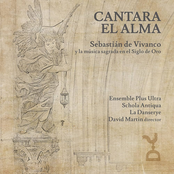
CANTARA EL ALMA: Sebastián de Vivanco y la música sagrada en el Siglo de Oro
▥
Vivanco: Caritas Pater est a9
Song of Songs
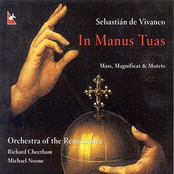
Vivanco, S.: Choral Music
▥
Polifonía de Semana Santa
▥
Choral Classics: Choral Classics from Cambridge
▥
Renaissance Choral Masterworks
▥
The Golden Age: Siglo de Oro
▥
The Golden Age - Siglo de Oro
▥
Chanticleer, Love Story
▥
Libro de Motetes 1610