Loading details…

Artist
Raimbaut de Vaqueiras
12+ albums
medievaltroubadourearly musicfrenchMittelalter
about
Raimbaut de Vaqueiras or Riambaut de Vaqueyras (floruit 1180-1207) was a Provençal troubadour and, later in his life, knight. His life was spent mainly in Italian courts[1] until 1203, when he joined the Fourth Crusade. As his name suggests, Raimbaut came from Vacqueyras near Orange, France. He spent most of his career as court poet and close friend of Boniface I of Montferrat. He served with him in action against the communes of Asti and Alessandria. Raimbaut claimed he earned a knighthood through protecting Boniface with his shield in battle at Messina, when they took part in Emperor Henry VI's invasion of Sicily. He was present at the siege and capture of Constantinople in 1204, and then accompanied Boniface to Thessalonica. His writings, particularly the so-called Epic Letter, form an important commentary on the politics of the Latin Empire in its earliest years, after which they suddenly cease: it is generally presumed that Raimbaut died on 4 September 1207, together with Boniface, in an ambush by the Bulgarians. The only critical edition of Raimbaut attributes 33 extant songs to him; only eight of the associate melodies have survived. He used a wide range of styles, including a descort in five languages, cansos, tensos and albas; he, with Perdigon and Ademar de Peiteus, invented the torneyamen (or at least left us its earliest example). One of his songs, Kalenda Maia, is referred to as an estampida and is considered one of the best troubadour melodies. However accordi
top songs
albums
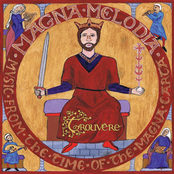
Magna Melodia - Medieval Music From The Time Of The Magna Carta
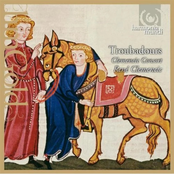
Troubadours
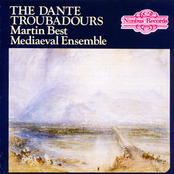
The Dante Troubadours
▥
Under the Greenwood Tree
▥
Futuro Antico I - II - III Collection
▥
Medieval Music (The Cross of Red - Music of Love and War From the Time of the Crusades)(New Orleans Musica Da Camera)
▥
Anonymous 4: On Yoolis Night
▥
Music for a Knight
▥
Merry It Is While Summer Lasts
▥
Dekameron: Czyli historia miłości średniowiecznej
▥
Estampies & danses royales
▥
Musique au temps des Templiers