Loading details…

Artist
Pierre Cadéac
12+ albums
about
Pierre Cadéac (fl. 1538–1558) was a French composer and probably singer of the Renaissance, active in Gascony. He wrote both sacred and secular vocal music, and had his music published in Paris and Lyons. His most famous work was the chanson Je suis deshéritée, which many later composers, including Lassus and Palestrina, used as a basis for parody masses. He was most likely from the small town of Cadéac, in the southern part of Gascony near the Pyrenees, as suggested by his name. All that is known about his life is that he was choirmaster in Auch, the historical capital of the region, in 1556, as mentioned on the title page of Du Chemin's publication of his Missa Alma Redemptoris Mater. A poem by Bernard du Poey, published in 1551, also mentions him as being resident in Auch, but does not give his employment or any other details.[1] In 1538 Jacques Moderne published some of his chansons in Lyons; this is the earliest date of activity known for Cadéac, but his location or employment at that time are not known. Cadéac wrote music in most of the vocal forms of the time and place, including secular chansons, motets, mass settings, Magnificats, and one isolated setting of the Credo (part of the mass). A total of 11 chansons, 24 motets, eight settings of the mass, and four of the Magnificat survive. His chansons seem to be his earliest work, and he turned to sacred music later in his career. Pierre Attaingnant (in Paris) and Jacques Moderne (in Lyons) published most of his chansons
top songs
albums
▥
Chamber and Vocal Music (16Th-18Th Centuries, Scottish) - Cadeac, P. / Blackhall, A. / Lauder, J. (On the Banks of Helicon)
▥
Les Plaisirs D'Amour - Sixteenth Century Chansons From the French Provinces
▥
Salus populi ego sum
▥
Au pres de vous
▥
Joyssance vous donneray
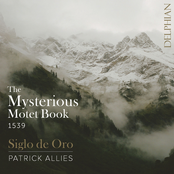
The Mysterious Motet Book of 1539
▥
Le trésor d'Orphée
▥
Claude Le Jeune
▥
Joyssance vous donneray - Chansons musicales
▥
Chamber and Vocal Music (16Th-18Th Centuries, Scottish) - Cadeac, P. / Blackhall, A. / Laude
▥
On The Banks of Helicon - Early Music of Scotland
▥
On the Banks of Helicon: Early Music of Scotland