Loading details…

Artist
Philippe Verdelot
12+ albums
renaissanceClassicalearly musicfrenchAll
about
Philippe Verdelot (1480 to 1485 – c.1530 to 1532?) was a French composer of the Renaissance, who spent most of his life in Italy. He is commonly considered to be the father of the Italian madrigal, and certainly was one of its earliest and most prolific composers; in addition he was prominent in the musical life of Florence during the period after the recapture of the city by the Medici from the followers of Girolamo Savonarola. Verdelot was born Les Loges, Seine-et-Marne, France. Details of his early life are obscure. He probably came to Italy at an early age, spending the first decade or two of the 16th century at some cities in northern Italy, most likely including Venice. A painting of 1511, described by Vasari but never positively identified, is believed by many musicologists to show Verdelot in Venice with an Italian singer. Verdelot is known to have been maestro di cappella at the Baptisterium San Giovanni in Florence from 1523 to 1525; and he seems also to have been employed at the Cathedral there, from 1523 until 1527. In 1526 he collaborated with Niccolò Machiavelli on a production of Machiavelli's famous cynical comedy La Mandragola. While the play was written in 1518, the 1526 performance in Florence was dedicated to the Medici pope, Clement VII. Both Machiavelli, expelled from Florence by the Medici, and Verdelot, generally sided with the Florentine Republic against the Medici, but attempted to play the delicate political game of pleasing both sides. The severa
top songs
albums
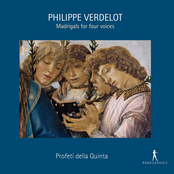
Verdelot: Madrigals for 4 Voices
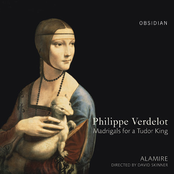
Verdelot: Madrigals for a Tudor King
▥
Verdelot, P.: Madrigals for A Tudor King
▥
Madrigals
▥
Madrigal History Tour
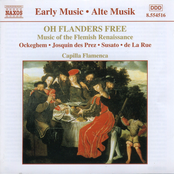
Oh Flanders Free: Music of the Flemish Renaissance
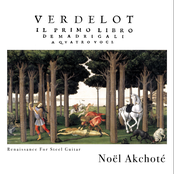
Verdelot - Il primo libro de madrigali a quattro voci (Renaissance for Steel Guitar)
▥
Refuge from the Flames, Miserere and the Savonarola Legacy
▥
Verdelot: Missa Philomena
▥
Song of Songs
▥
Verdelot - Hymnorum (Renaissance for Steel Guitar)
▥
Italian Lute Songs