Loading details…

Artist
Pete Steele
12+ albums
bluegrassAllamericanafolkold timey
about
Pete Steele (March 5, 1891 - November 21, 1985) was an American traditional banjo player. Of all the early banjo players recorded for the Library of Congress’s folk music archive, none commanded as many techniques or employed as many tunings as Simon “Pete” Steele. A dazzling array of frailing, two-finger, and up-picking styles defines his extensive repertoire of instrumentals, folk songs, and ballads. , Steele gave few public performances outside his home community in Hamilton, Ohio, yet he had considerable influence on musicians of the urban folk revival during the 1950s and 1960s. Born in Woodbine, Kentucky, Steele began playing the banjo when he was six or seven on a fretless instrument made for him by his fiddle-playing father. While much of Steele’s instruction came from his father, other local musicians also passed along tunes. One of these, “Coal Creek March,” a parlor-based banjo instrumental with a series of ascending and descending arpeggios, commemorated mining troubles that occurred in the early 1890s in Coal Creek, Tennessee. In 1938 Steele recorded “Coal Creek March” for the Library of Congress. With the tune’s publication in 1942, Steele’s playing came to be known to a wider audience, and by the mid-1950s, Pete Seeger had made the “March” an integral part of his concerts, urging his listeners to learn directly from the music’s authentic sources. This led to Steele’s 1958 solo album on the Folkways label, Banjo Tunes and Songs. In later years, those who traveled
top songs
albums
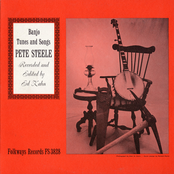
Banjo Tunes and Songs
▥
Classic Mountain Songs from Smithsonian Folkways
▥
Iommi
▥
Classic Banjo from Smithsonian Folkways
▥
A Treasury Of Library Of Congress Field Recordings
▥
The Art of Field Recording Volume 2: Disc 1 - Survey
▥
Folk Music U.S.A.: Vol. 1
▥
The Art of Field Recording Volume 2: Disc 3 - Accompanied Songs and Ballads
Classic Mountain Songs
▥
Art Of Field Recording Vol.1: disc four, instrumental and dance
▥
Folk Music in America, Vol. 12 - Songs of Local History & Events
▥
Classic Mountain Songs (From Smithsonian Folkways)