Loading details…

Artist
Oskar Sala
12+ albums
electroniccontemporary classicalAvant-Gardeexperimentaltrautonium
about
Oskar Sala (June 18, 1910 - February 26, 2002) was a 20th century German composer and a pioneer of electronic music. He played an instrument called the trautonium, a predecessor to the synthesizer. Sala was a pupil of Friedrich Trautwein, the inventor of the trautonium, and studied with Paul Hindemith in 1930 at the Berlin conservatory. Oskar Sala further developed the trautonium into the Mixtur-Trautonium. The Mixtur-Trautonium allowed for the first time in music history the execution of sounds which had only been known in theory since the Middle Ages, but were never actually playable. Sala's invention opened the field of subharmonics, the symmetric counterpart to overtones, so that a thoroughly distinct tuning evolved. Sala presented his new instrument to the public in 1952 and would soon receive international licenses for its circuits. That same year, composer Harald Gezmer delivered the score to the first Concert For Mixtur-Trautonium And Grand Orchestra. In the 1940s and 1950s he worked on many film scores. He created the non-musical soundtrack for Alfred Hitchcock's film The Birds. He received many awards for his film scores, but never an Oscar. He also did much work on German commercials, most notably one referred to as HB's little man. He was an honorary Senator of Berlin. User-contributed text is available under the Creative Commons By-SA License; additional terms may apply.
top songs
albums
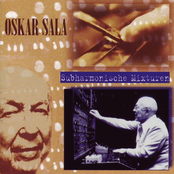
Subharmonische Mixturen
▥
Early Gurus Of Electronics
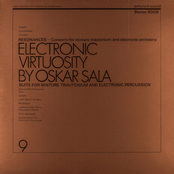
Electronic Virtuosity
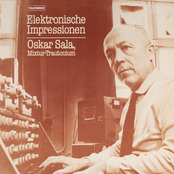
Elektronische Impressionen
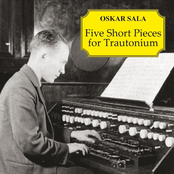
Five Short Pieces for Trautonium
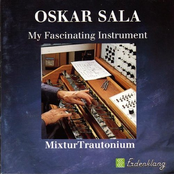
My Fascinating Instrument
Ohm: The Early Gurus of Electronic Music
▥
OHM+: The Early Gurus Of Electronic Music [Disc 1]
Subharmonic Mixtures
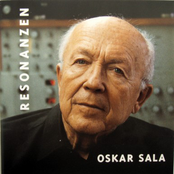
resonanzen
▥
OHM - The Early Gurus of Electronic Music
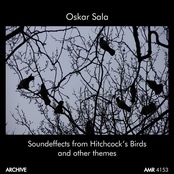
Sound Effects from Hitchcock's 'The Birds' and More