Loading details…

Artist
Miguel Angel Coria
12+ albums
spanishcontemporary classicalImpressionism
about
Miguel Ángel Coria Varela (born October 24, 1937) is a Spanish composer of classical music. His early work showed affinities to the music of Anton Webern, but he became increasingly influenced by Impressionism. From 1973 he entered his post-modern period where his compositions were marked by "attempts to evoke the spirit of the music of the past, but without literal allusions".[1] In addition to his instrumental music, he also composed an opera, Belisa, which premiered at the Teatro de la Zarzuela in 1992. Coria served as the Administrative Director of the RTVE Symphony Orchestra and Chorus in the 1980s and was a co-founder of ALEA, Spain's first laboratory for electronic music. Miguel Ángel Coria was born in Madrid in 1937 and began his musical studies in 1952. His early mentors were Antonio Iges, Angel Arias, Pedro Lerma and most importantly Gerardo Gombau with whom he studied composition at the Madrid Royal Conservatory. Coria won the Conservatory's Fugue Prize in 1961. He also showed an early interest in electroacoustic music and in 1964 joined Luis de Pablo and Carmelo Alonso Bernaola in founding ALEA, Spain's first laboratory for electronic music. A grant from the Gaudeamus Foundation in 1965 allowed him to pursue further studies with Roman Haubenstock-Ramati and Iannis Xenakis. The following year, he received a grant from the Juan March Foundation to study with Gottfried Michael Koenig at the Institute of Sonology in Utrecht, during which time he composed Collage (196
top songs
albums
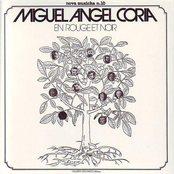
En Rouge Et Noir
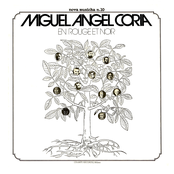
Nova musicha No. 10 (En rouge et noir)
▥
Nova Musicha N.10 En Rouge Et Noir
▥
Anthology of contemporary spanish music
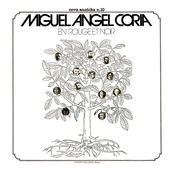
En rouge et noir (Nova musicha n.10)
▥
En Rouge Et Noir (Cramps Nova Musicha n.10)
▥
nova musicha n.10 MIGUEL ANGEL CORIA En rouge et noir 1975
▥
Anthology Of Contemporary Spanish Music (Disc 1)
▥
nova musicha. n.10 En Rouge Et Noir
▥
赤と黒の中に "En Rouge Et Noir"
▥
赤と黒の中に "En Rouge Et Noir" [sideB]
▥
赤と黒の中に "En Rouge Et Noir" [sideA]