Loading details…

Artist
Mieczyslaw Weinberg
12+ albums
20th CenturyClassicalcomposerrussianconcerti
about
Mieczysław Weinberg (8 December 1919 – 26 February 1996) was a Polish-born Soviet composer and pianist. He was born in Warsaw to parents who worked in Yiddish theatre, and his early environment was strongly influenced by music. At the age of 12 he began formal musical training and later studied piano at the Warsaw Conservatory. In 1939 he fled Warsaw following the German invasion of Poland at the beginning of the Second World War. Members of his family who remained in Poland were later murdered at the Trawniki concentration camp. After leaving Poland, Weinberg settled in the Soviet Union. He eventually established himself in Moscow, where he received support from Dmitri Shostakovich and from the Soviet Committee on the Arts. Changes in Soviet cultural policy after the war led to increased pressure on minority groups, including Jews. Although Weinberg’s music continued to be performed and was generally well regarded, he was monitored and harassed by the MVD. On 6 February 1953 he was arrested and imprisoned in Lubyanka Prison. Intervention by Dmitri Shostakovich and the death of Joseph Stalin contributed to his release on 25 April 1953. The 1960s represented the peak of Weinberg’s professional recognition. In addition to his concert works, he composed music for film, which brought him wider public attention. His score for the animated film "Winnie-the-Pooh", directed by Fyodor Khitruk, was particularly successful, and songs performed by the main character became widely known
top songs
albums
▥
Weinberg: String Quartets, Vol. 3
▥
Piano Works
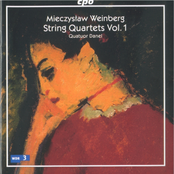
String Quartets Vol 1 Quatuor Danel
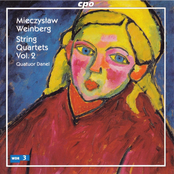
String Quartets Vol 2 Quatuor Danel
▥
Piano Works (Complete), Vol. 1 (Brewster Franzetti)
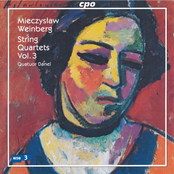
String Quartets Vol 3 Quatuor Danel
▥
Piano Works (Complete), Vol. 4 (Brewster Franzetti)
▥
Piano Works (Complete), Vol. 2 (Brewster Franzetti)
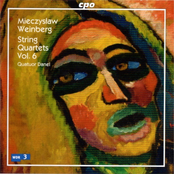
String Quartets Vol. 6 - Quatuor Danel
▥
Piano Works (Complete), Vol. 3 (Brewster Franzetti)
▥
String Quartets Vol. 4 - Quatuor Danel
▥
On the Threshold of Hope: Chamber Music by Mieczyslaw Weinberg