Loading details…

Artist
Mestre Bimba
12+ albums
capoeira
about
Manuel dos Reis Machado "Mestre Bimba" was born in Salvador Brazil on November 23, 1900, died February 15 1974. The nickname "Bimba" came up due to a bet between his mother and the midwife during his birth; his mother bet that he was going to be a girl and the midwife bet he would be a boy. After he was delivered, the midwife said...it's a boy, look at his "bimba" (male sexual organ). He started learning Capoeira when he was 12 years old, with a capitão da Companhia Baiana de Navegação (Navigation Captain) from Estrada das Boiadas (present day bairro da Liberdade) in Salvador called Bentinho, even though, in those days, Capoeira was still being persecuted by the authorities. He would later be known as one of the legendary founding fathers of contemporary Capoeira. The other would be Mestre Pastinha, the father of Capoeira Angola. At 18, Bimba felt that Capoeira had lost all its efficiency as a martial art and an instrument of resistance, becoming a folkloric activity reduced to nine movements. It was then that Bimba started to retrieve movements from the original Capoeira fights and added movements from another African fight called Batuque - a vicious grappling type of martial art that he learned from his father (of which his father was a champion), as well as introducing movements created by himself. This was the beginning of the development of Capoeira Regional. In 1928, a new chapter in the history of Capoeira began, as well as a change in the way black people (of African
top songs
albums
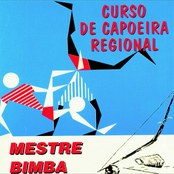
Curso de Capoeira Regional
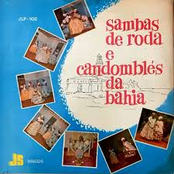
Sambas de Roda e Candomblés da Bahia
▥
Batucada Capeoira
▥
Brazilian Beats 7 (Mr Bongo presents)
▥
Brazilian Beats 7
▥
Batucada Capoeira
▥
Gravado em 1940 (ripped by Teimosia)
▥
Capoeira Regional
▥
Mr Bongo Presents: Brazilian Beats 7
▥
25 Years of Brazilian Beats (Mr. Bongo Presents)
▥
Capoeira
▥
25 Years of Brazilian Beats, Pt. 2 (Mr Bongo Presents)