Loading details…

Artist
Meade 'Lux' Lewis
12+ albums
jazz
about
Anderson Meade Lewis (September 4, 1905 – June 7, 1964), known as Meade "Lux" Lewis, was an American pianist and composer, remembered for his playing in the boogie-woogie style. His best-known work, "Honky Tonk Train Blues”, has been recorded by many artists. His father, a guitarist who made two recordings of his own, introduced Meade to music and arranged for him to have violin lessons. He gave up the violin at age 16, shortly after his father's death, and switched to the piano. The nickname "Lux" was given to him by his boyhood friends. Albert Ammons and Pete Johnson, often appeared with Lux as a trio and became the leading boogie-woogie pianists of the day. They had an extended engagement at Café Society, toured as a trio, and inspired the formation of Blue Note Records in 1939. Their success led to a decade-long boogie-woogie craze,[6] with big-band swing treatments by Tommy Dorsey, Will Bradley, and others; and numerous country boogie and early rock-and-roll songs. Lewis appeared in the movies New Orleans (1947) and Nightmare (1956). He also appeared, uncredited, in the movie It's a Wonderful Life (1946), playing piano in the scene where George Bailey gets thrown out of Nick's Bar. Meade "Lux" Lewis was among hundreds of artists whose material was destroyed in the 2008 Universal fire. User-contributed text is available under the Creative Commons By-SA License; additional terms may apply.
top songs
albums
▥
Meade 'Lux' Lewis (1939 To Late 1940s)
▥
The Ultimate Jazz Archive
▥
The Smithsonian Collection Of Classic Jazz, Vol. 2
▥
Jazz: The Smithsonian Anthology
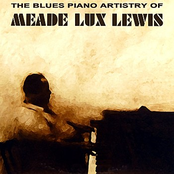
The Blues Piano Artistry of Meade Lux Lewis
▥
JG23: Boogie-Woogie / Roll' Em
The Smithsonian Collection of Classic Jazz
▥
Bill Wyman's Blues Odyssey CD1
▥
Classic Piano Blues
▥
Bill Wyman's Blues Odyssey
▥
The Best Boogie Woogie Piano
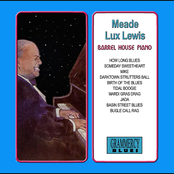
Barrel House Piano