Loading details…

Artist
Manuscript Torino
12+ albums
15th centuryfrenchcypriot
about
The early fifteenth-century Torino Codex (Torino, Biblioteca Nazionale MS J.II.9), an anonymous source of music that remains one of the few windows into Western music of that period. Although it is the largest musical source in the French tradition between the Ars nova manuscripts of the fourteenth century and the Franco-Burgundian manuscripts of the late fifteenth century, the music of the Torino Codex has attracted comparatively little attention from performing ensembles and scholars, no doubt stemming from the fact that almost all of the pieces are both anonymous and significantly lacking in concordances with other known sources. The music of the Torino Codex originated on the island of Cyprus in the mid-1410s within the court of King Janus I of the ruling Lusignan family from western France. But the manuscript ended up at the court of Savoy, possibly connected with Anne of Cyprus in her marriage to Louis of Savoy in 1433. Spanning some 159 folios and ranging from sacred plainchant and polyphony to secular song, the music was probably not written for public consumption nor a one-time hearing, but rather for repeated enjoyment by an intimate circle of singers and a small court audience. The source comprises five sections (fascicles) organized by genre—the first devoted solely to chant and the remaining four fascicles dedicated to sacred and secular polyphony. User-contributed text is available under the Creative Commons By-SA License; additional terms may apply.
albums
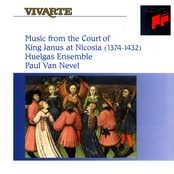
Music From The Court Of King Janus At Nicosia
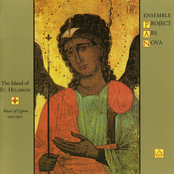
The Island Of St. Hylarion
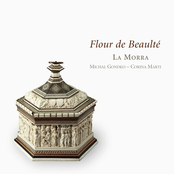
Flour De Beaulté
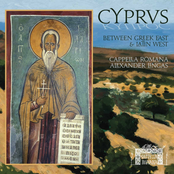
Cyprus: Between Greek East And Latin West
Intabulations
D'Amours Loial Servant
Beauté Parfaite
The Garden Of Zephyrus
Parle Qui Veut
Les Musiques De La Cour De Savoie
The Cyprus Manuscript: Music At The Court Of The Lusignans
Le Manuscrit De Chypre