Loading details…

Artist
Luperce Miranda
12+ albums
brasilinstrumentalchorobandolimlatin
about
Luperce Miranda (Luperce Bezerra Pessoa de Miranda Jul 28, 1904 - Apr 05, 1977), and later, Jacob do Bandolim, were responsible for the presence of the mandolin in the Brazilian popular music scene. Before them, the mandolin was used sporadically and always as accompaniment. The crescent soloist activity of these renowned musicians imposed the instrument in a broader circle. Miranda played and recorded with the who's who of Brazilian popular music. Among his recordings, both as a soloist and accompanist, he left around 900 registers. He wrote around 500 compositions in several genres, such as choro, valse, and frevo. He was the first to be awarded by the Image and Sound Museum of Rio with the title Bacharel da Música Popular Brasileira (1970). At the same time, he was a noted professor, having founded the Academia de Música Luperce Miranda. A superb musician of irreproachable technique, he forged his style in the Neapolitan school, leaving to do Bandolim the honor of the development of a Brazilian school of the instrument. He began to play the mandolin at eight, writing his first composition, a frevo, at 15. In the following year, he organized the Jazz Leão do Norte, a nine-piece orchestra in which he played the piano. In spite of what he declared (and what was widely rumored), he never took part in the Turunas da Mauricéia group. The group did record his tunes in their first contract with Odeon (1927), though they did all with Augusto Calheiros (the Patativa do Norte): the
top songs
albums
▥
Os Melhores Choros de Todos os tempos
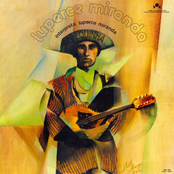
Luperce Miranda Interpreta Luperce Miranda
▥
Pixinguinha - 100 Anos - Vol. 1 E Vol. 2
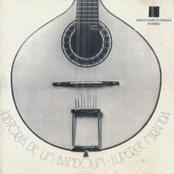
História de um Bandolim
▥
Choro 1906-1947
▥
1975
▥
História de Um Banbolim - 1977
▥
Choro 1906-1947 (Disc 2)
▥
A Música Genial De Pixinguinha
▥
Bresil: Choro - Samba - Frevo (1914-1945)
▥
Choro é Isto
▥
Para Sempre - Choros