Loading details…

Artist
Les Baxter and His Orchestra
12+ albums
loungeeasy listeningorchestral popAll
about
Les Baxter (March 14, 1922 – January 15, 1996) was an American musician and composer. Baxter studied piano at the Detroit Conservatory before moving to Los Angeles for further studies at Pepperdine College. Abandoning a concert career as a pianist, he turned to popular music as a singer. At the age of 23 he joined Mel Tormé's Mel-Tones, singing on Artie Shaw records such as "What Is This Thing Called Love?". Baxter then turned to arranging and conducting for Capitol Records in 1950, and was credited with the early Nat King Cole hits, "Mona Lisa" and "Too Young", but both were actually orchestrated by Nelson Riddle.[1] (In later releases of the recordings the credit was corrected to Riddle.[citation needed]) Not a uncommon practice these days: Baxter himself had arranged Nat King Cole's "Nature Boy" in 1947 for a recording conducted by Frank De Vol. In 1953 he scored his first film, the sailing travelogue Tanga Tika. With his own orchestra, he released a number of hits including "Ruby" (1953), "Unchained Melody" (1955) and "The Poor People Of Paris" (1956). The latter recording sold over one million copies and was awarded a gold disc.[2]He also achieved success with concept albums of his own orchestral suites: Le Sacre Du Sauvage, Festival Of The Gnomes, Ports Of Pleasure, and Brazil Now, the first three for Capitol and the fourth on Gene Norman's Crescendo label. The list of musicians on these recordings includes Plas Johnson and Clare Fischer. Baxter also wrote the "Whist
top songs
albums

Electro Lounge Volume 2
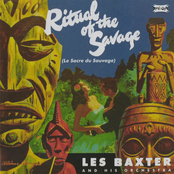
Ritual of the Savage
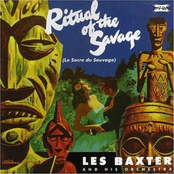
Ritual Of The Savage (Le Sacre Du Sauvage)
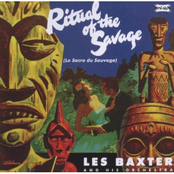
Ritual of the Savage ('52)/The Passions ('54) (With Bas Sheva)
▥
Ultra-Lounge, Vol. 3: Space Capades
▥
Ultra-Lounge: Tiki Sampler
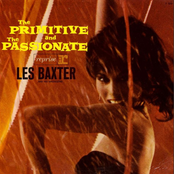
The Primitive and the Passionate
▥
Continental Remastered
▥
The Soul of The Drums
▥
The Soul of the Drums (2005 Remaster)
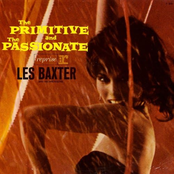
The Primitive and the Passionate (2006 Remaster)
▥
Poinciana (That's Entertainment)