Loading details…

Artist
Jurgis Juozapaitis
12+ albums
contemporary classicalClassicallithuaniancomposergammarec
about
"I always found it most interesting to watch the orchestra and to guess at the secret of its sound." - says Jurgis Juozapaitis. Even in his early works, the composer - who made his name with a number of orchestral pieces (the symphonies Rex, 1973, and Zodiacus, 1977) - focused on sound colour. The evolution of his musical style in the 1970s reveals the impact of dodecaphonic, quarter tone, and aleatoric music; in the 1980s-90s, alongside expressive atonal works, Juozapaitis was also writing pieces akin to the aesthetics of romanticism and minimalism. There is no dominating trend in Jurgis Juozapaitis' music in recent years; he continues to favour a diversity of technique instead of the restraining framework of any sterile system. "I'm moving away from numerically based logic, from constructivism. It's much more important to feel intuitively the free flow of the music, the right moment of inspiration." User-contributed text is available under the Creative Commons By-SA License; additional terms may apply.
top songs
albums
▥
Vasks' 'Cantabile' and Other Baltic Works for String Orchestra Vol. 2
▥
Tower Counterpoints
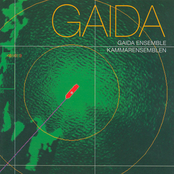
Gaida: Music From the Gaida Festival, Lithuania, 2001-2003
▥
Vladimir Malinin, Violin
▥
Baltic Prayer
▥
Music From Estonia, Lativia and Lithuania
Gaida
▥
Bokštų kontrapunktai
▥
1988 Perpetuum Mobile
▥
Ysaÿe
▥
Cantabile & Other Baltic Works (Ostrobothnian Chamber Orchestra feat. conductor: Juha Kangas)
▥
Baltic Works for Strings Vol.2 - Kangas, Ostrobothnian CO (FINLANDIA 1995)#