Loading details…

Artist
Joseph Beuys
12+ albums
fluxusgermansound artexperimentalAvant-Garde
about
Joseph Beuys was born in 1921 in Krefeld, a city in northwestern Germany near the Dutch border. He grew up in the nearby towns of Kleve and Rindern, the only child in a middle class, strongly Catholic family. During his youth he pursued dual interests in the natural sciences and art, and he chose a career in medicine. In 1940 he joined the military, volunteering in order to avoid the draft. He was trained as an aircraft radio operator and combat pilot, and during his years of active duty he was seriously wounded numerous times. At the end of the war he was held in a British prisoner-of-war camp for several months, and returned to Kleve in 1945. Coming to terms with his involvement in the war was a long process and figures, at least obliquely, in much of his artwork. Beuys often said that his interest in fat and felt as sculptural materials grew out of a wartime experience--a plane crash in the Crimea, after which he was rescued by nomadic Tartars who rubbed him with fat and wrapped him in felt to heal and warm his body. While the story appears to have little grounding in real events (Beuys himself downplayed its importance in a 1980 interview), its poetics are strong enough to have made the story one of the most enduring aspects of his mythic biography. On his return from the war Beuys abandoned his plans for a career in medicine and enrolled in the Düsseldorf Academy of Art to study sculpture. He graduated in 1952, and during the next years focused on drawing--he produced
top songs
albums
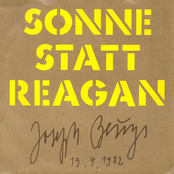
Sonne statt Reagan
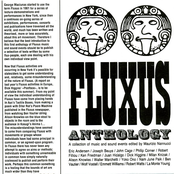
Fluxus Anthology
Abstract Energy
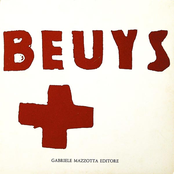
Ja Ja Ja Nee Nee Nee
▥
Audio By Visual Artists, TELLUS 21
Art Of Society 1.11.1974 Institute Of Contemporary Arts London
▥
Ja ja ja ja ja, nee nee nee nee nee
▥
Joseph Beuys 1982
▥
Schottische Symphonie / Requiem Of Art
▥
Revolutions Per Minute (The Art Record)
▥
Anthology
▥
Protestsongs.de