Loading details…

Artist
Jones-Smith Incorporated
12+ albums
jazzswingAllUSA
about
William James "Count" Basie (August 21, 1904 – April 26, 1984) was an American jazz pianist, organist, bandleader, and composer. At the end of 1936, Basie and his band, now billed as "Count Basie and His Barons of Rhythm," moved from Kansas City to Chicago. In that city in October 1936, the band had a recording session which the producer John Hammond later described as "the only perfect, completely perfect recording session I've ever had anything to do with". Hammond had heard Basie's band over short-wave radio and went to Kansas City to check them out. He invited them to record, in performances which were Lester Young's earliest recordings. Those four sides were released under the band name of Jones-Smith Incorporated; the sides were "Shoe Shine Boy", "Evening", "Boogie Woogie", and "Oh, Lady Be Good". Basie had already signed with Decca Records, but did not have his first recording session with them until January 1937. Right from the start, Basie's band was noted for its rhythm section. Another Basie innovation was the use of two tenor saxophone players; at the time, most bands had just one. When Lester Young complained of Herschel Evans' vibrato, Basie placed them on either side of the alto players, and soon had the tenor players engaged in "duels". Many other bands later adapted the split tenor arrangement. By then, Basie's sound was characterized by a "jumping" beat and the contrapuntal accents of his own piano. His personnel around 1937 included: Lester Young and Hersch
top songs
albums
▥
Ken Burns Jazz Series: Lester Young
▥
BD Music Presents Lester Young & Billie Holiday
▥
Ken Burns JAZZ: The Story Of America's Music
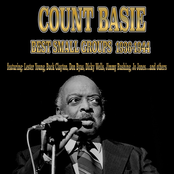
Count Basie - Best Small Groups (1936-1944)
▥
Ken Burns Jazz
▥
Finest Tunes, 1929 - 1936
▥
Jazz Session Vol.01
▥
The Ultimate Jazz Archive
▥
Ken Burns's Jazz: The Story of American Music
▥
Ken Burns Jazz (Disc 2)
▥
CABU Jazz Masters - Une Anthologie 1936 - 1956
▥
Vocalion 3459