Loading details…

Artist
John Tavener
12+ albums
contemporary classicalClassicalcomposersSacredchoral
about
British composer John Tavener (born 28 January 1944 in Wembley, London, died 12 November 2013 in Dorset) was a direct descendant of the sixteenth century composer John Taverner. He attended Highgate School (where a fellow pupil was John Rutter) and later studied at the Royal Academy of Music, where his tutors included Sir Lennox Berkeley. He first came to prominence in 1968 with his dramatic cantata The Whale, based on the Old Testament story of Jonah. It was premièred at the London Sinfonietta's début concert and later recorded by Apple Records. The following year he began teaching at Trinity College of Music, London. Other works released by Apple included his Celtic Requiem. In 1977, he joined the Russian Orthodox Church. Orthodox theology and Orthodox liturgical traditions became a major influence on his work. He was particularly drawn to its mysticism, studying and setting to music the writings of Church Fathers such as St John Chrysostom. One of Tavener's most popular and frequently performed works is his short unaccompanied four-part choral setting of William Blake's The Lamb, written for his nephew, Simon, on his third birthday one afternoon in 1982. This simple, homophonic piece is usually performed as a Christmas carol. More important, however, were his explorations of Russian and Greek culture, as shown in "Akhmatova Requiem" and "Sixteen Haiku of Seferis". Later prominent works include The Akathist of Thanksgiving (1987, written in celebration of the millennium of
top songs
albums
▥
John Tavener A Portrait 1
Tavener: The Lamb
Vaughan-Williams and Tavener
The John Tavener Collection
John Tavener: Eternity's Sunrise
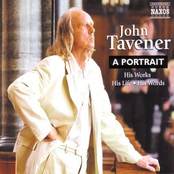
A Portrait - His Works - His Life - His Words
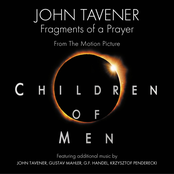
Children of Men (Music from the Motion Picture)
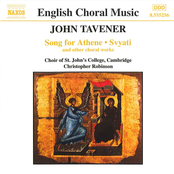
TAVENER: Song for Athene / Svyati
▥
TAVENER, J.: Ex Maria Virgine (Clare College Choir)

TAVENER: Protecting Veil / In Alium
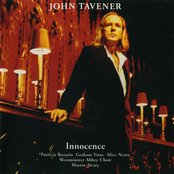
Innocence
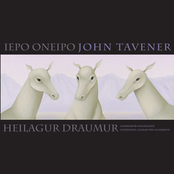
Iepo Oneipo