Loading details…

Artist
Jean Barraqué
12+ albums
contemporary classicalfrenchserialismcomposermusique concrète
about
Jean-Henri-Alphonse Barraqué (January 17, 1928 – August 17, 1973) was a French composer. Barraqué was born in Puteaux. He studied in Paris with Jean Langlais and Olivier Messiaen and, through Messiaen, became interested in serialism. It is thought that Barraqué destroyed many of his early works, leaving his Piano Sonata, for which he gave the date 1952, as his earliest acknowledged work. It is a large piece, lasting over forty minutes, and is divided into two connected sections, roughly equal in length. The densely dissonant polyphonic texture of the work is often compared to the Second Piano Sonata of Pierre Boulez, a work he knew well. In performance, however, the overall impact is quite different from anything of Boulez, being more akin in spirit to the late sonatas of Ludwig van Beethoven. The sonata was recorded commercially by Yvonne Loriod in the late fifties, but it was not given its first performance in public until 1967, when the Danish pianist Elisabeth Klein played it in a recital in Copenhagen, seemingly unaware that she was in fact giving the world première. Barraqué then produced his only electronic piece, the musique concrète Etude (1954), made at Pierre Schaeffer's studio. He planned a large-scale piece, or rather collection of pieces, based on Hermann Broch's novel "The Death of Virgil", a book which Barraqué's friend and sometime lover Michel Foucault recommended to him. He completed two of the projected parts: Chant aprés chant (1966), and Le temps rest
top songs
albums
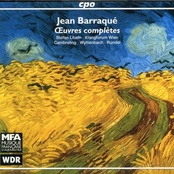
Barraqué: Œuvres complètes
Barraqué: Sonate pour piano
Sonate pour piano (Herbert Henck)
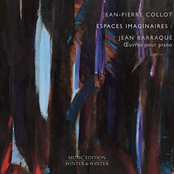
Jean Barraqué: Espaces Imaginaires (Œuvres pour Piano)
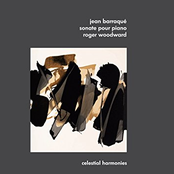
Jean Barraqué: Sonate Pour Piano
Archives GRM
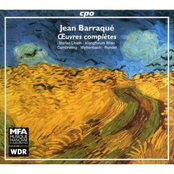
Oeuvres complètes (Wyttenbach, Rundel, Cambreling, etc)
▥
Archives GRM 1
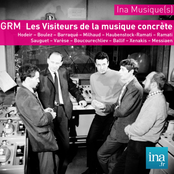
Archives GRM - Les Visiteurs De L'Aventure Concrète
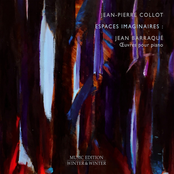
Barraqué: Espaces imaginaires
▥
Archives GRM, [Disc 1] : Les Visiteurs De L’Aventure Concrète
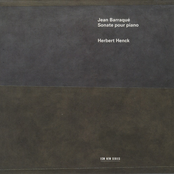
Sonate pour Piano