Loading details…

Artist
Jan Verwey
12+ albums
jazz
about
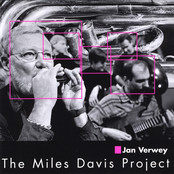
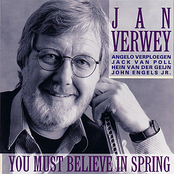
"Jan is the only harmonica-player, who's not trying to play my style" (Jean 'Toots' Thielemans) Chromatic harmonica and jazz; as one of the few who dared to play the harmonica for their livelyhood, Jan is probably the only one who succeeded in creating his own style on this charateristic instrument. He is, for instance, the only one who plays octaves on the harmonica. Also in his solo's. Jan Verwey is very much a bebopper and an entirely self-taught one at that. Thanks to a very own developed instrumental technique, he boldy brings about his desired harmony and melody to his solo's. How exceptional his quality is can be seen by the fact that during his first visit to America (early autumn 1990), he was immediately rushed into the studio by top-producer Bill Goodwin (drummer for Phil Woods) to record the CD "THE DUTCH CONNECTION" wich led to a performance at the "North Sea Jazzfestival" in the Netherlands. In 1991 he was again in the USA as the only European to be invited to play at, among others, the festival "Celebration of the arts" in Watergap, as a soloist. He also gave a duo-concert with pianist Hod O'brien (known for his albums with Chet Baker) at the well-known Jazz-club "The Dearhead Inn". WAS PLAYING IN 2007 ON FESTIVALS IN MEDICINE HAT AND CALGARY (CANADA). He also played in different locations in Europe. Recently he played in Copenhagen, Frankfurt and (at "Birdland ) Hamburg. Jan Rensen (NL) - jazz-critic, december 2007 User-contributed text is available und
why this is interesting
# On Jan Verwey This album represents a quietly radical achievement: a musician who claimed genuine independence on an instrument historically shadowed by one towering figure. Verwey's self-taught mastery of chromatic harmonica—particularly his distinctive use of octaves within improvisation—demonstrates how technical innovation can birth artistic identity. His bebop vocabulary, delivered through an entirely personal instrumental vocabulary, invites us to reconsider what jazz sophistication sounds like beyond guitar and saxophone. The album's significance lies not in novelty for its own sake, but in how one musician's commitment to developing an authentic voice on an unlikely instrument expands our understanding of jazz possibility.