Loading details…

Artist
Irén Lovász
12+ albums
folkfemale vocalistsworld fusion
about
In 2003, Irén Lovász won the eMeRTon Prize for the “Singer of the Year,” awarded by musical experts of Hungarian Radio. This is her first new record release since then. 2005 marks the tenth anniversary of her first solo disc (Lovász–Hortobágyi: Világfa, 1995) when she burst to the forefront of Hungarian folk music and world music. The record was released by the National Museum of Hungary as the incidental music to the great Millecentennial archaeological exhibition. A remixed and shortened version of this (Irén Lovász: Rosebuds in a Stoneyard, Erdenklang Musikverlag, 1996) immediately won over critics and audiences in Germany and throughout the world. In 1996, the record won the German Critics’ award in the ethno/world music category. After that great success, Világfa was also released by the Hungarian label, Fonó Records, in 1999. In the mean time a new music was composed for her voice by the Estonian Peeter Vahi. This displayed a new side of Lovász’ singing: 13th century Tibetan and Sanskrit words to contemporary music : Supreme Slence (CCn’C Records 1998). Her first joint record with Hungarian group Makám, Skanzen, was released in 1999 (Fonó Records). This was followed by an album with the Teagrass group of Czech-Moravian-Slovak musicians: Wide is the Danube (CC’nC Records, 2000), an idiosyncratic approach to Eastern European folk music. Another two records with Makám followed: 9 Colinda and Szindbád (Fonó Records, 2001 and 2002). These ten fertile years have also produced
top songs
albums
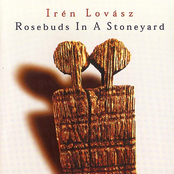
Rosebuds in a stoneyard
▥
Rosebuds Is A Stoneyard
▥
Her Song: Exotic Voices Of Women From Around The World
▥
Wide is the Danube
▥
World Voices 1
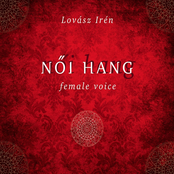
Női Hang
▥
The Rough Guide to Hungarian Music
▥
Sacred Hungarian Folk Songs And Gregorian Chants
▥
Soundscape
▥
Fellegajtó (Cloud-Doors)
▥
The Transglobal & Magic Sounds of László Hortobágyi
▥
Belső Hang