Loading details…

Artist
Heinrich Ignaz Franz von Biber
12+ albums
baroqueClassicalaustriancomposerviolin
about
Heinrich Ignaz Franz von Biber (1644–1704) was a Czech-Austrian composer and violinist. Biber was born on 12th August 1644 in Stráž pod Ralskem (Czechia). He was a violinist at the castle of Kromeriz and the Salzburg court, and In 1684 became Kapellmeister in Salzburg, where he died twenty years later on 3rd May 1704. His works show a predilection for canonic use and harmonic diapason that pre-date the later Baroque works of Johann Pachelbel and Johann Sebastian Bach. He was known as a violin virtuoso and is best known for his violin works, many of which employ scordatura (unconventional tunings of the open strings). The music of Biber has enjoyed a renaissance, in part, because of "The Rosary Sonatas". This set of fifteen sonatas is also known as "The Mystery Sonatas" (for key events in the lives of the Virgin Mary and Christ) and "The Copper-Engraving Sonatas" (for the engravings at the head of the sonatas). Each sonata employs a different tuning of the violin. This use of scordatura transforms the violin from the pleasures of the Five Joyful Mysteries (the Annunciation, etc.) to the trauma of the Five Sorrowful Mysteries (the Crucifixion, etc.) to ethereal nature of the Five Glorious Mysteries (the Resurrection, etc.). The reconfiguration of the violin is also symbolic. For example, the middle two strings of the violin are crossed for the "Resurrection" sonata. Biber wrote choral and chamber music, concerti, operas, and a number of better-known pieces such as the "Nigh
top songs
albums
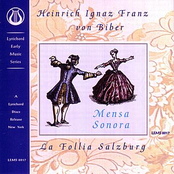
Biber: Mensa Sonora
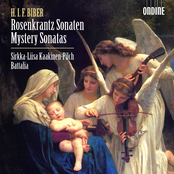
Biber: Rosenkrantz Sonaten (Mystery Sonatas)
Biber, Muffat: Der Türken Anmarsch
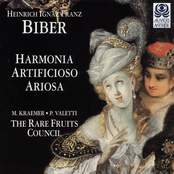
Biber: Harmonia artificioso-ariosa
Biber: Rosenkrantz Sonaten
Biber: The Rosary Sonatas

Just Biber
Biber: Violin Sonatas
Biber: Rosenkranzsonaten, C 90-105
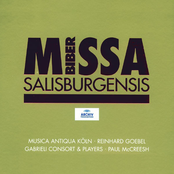
Biber: Missa Salisburgensis
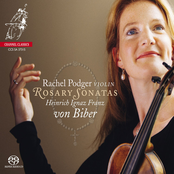
Biber: Rosary Sonatas (Mystery Sonatas)
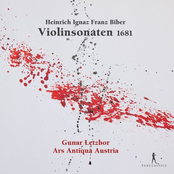
Biber: Violin Sonatas Nos. 1-8, C. 138-145