Loading details…
H
Artist
Harry Mudie Meet King Tubby's
12+ albums
dubreggaejamaicandub reggaeking tubby
about
Harry Mudie Birth name-Harry A. Mudie Born -c. 1940 Origin -Spanish Town, Jamaica Harry A. Mudie (born c. 1940 in Spanish Town, Jamaica) is a Jamaican record producer. Harry Mudie attended to the St Jago High School. In the mid fifties, he launched his own sound system "Mudies Hi-Fi", before going to the UK to study electronics and photography. Back in Jamaican in the late 1950's, his first production was "Babylon Gone" (1962) by rasta drummer Count Ossie and saxophonist Wilton Gaynair released in the UK in 1962 on Blue Beat. But he spent time mainly in the 60s in operating his "Scaramouch Garden Amusement Center in Spanishtown opened in 62. Came back to music in the late 60s by launching his Moodisc label and by recording artists such as Winston Wright, Winston Shand, Lloyd Jones, Count Ossie and the then-unknown I Roy. Early 70s, first to record Big Joe (Run Girl, Woodcutter Skank, Black Stick Rock Reworked with Ossie in 70 "Whispering Drums" He was the first to use strings in reggae (John Holt "Time is the Master" in 1973 masterpiece fine songs, hevy rhythms orchestral arrangements recorded in London, had some dub albums with King Tubby 75-76-77. Peak in the mid-late 70s, he worked with Gregory Isaacs, The Heptones, Joe White, Prince Heron... Throughout the sixties he produced numerous musicians on his different labels: Moodisc, Jungle, Afro and Jukebox. Relocated to Florida in the 80s Albums * The Rhythm Rulers & Mudies All Stars - 1970 - Book Of Drifters - Moodi
why this is interesting
# On Harry Mudie Meeting King Tubby's This collaboration represents a pivotal moment where two distinct production philosophies converge—Mudie's foundational approach to reggae and ska recording meets King Tubby's revolutionary dub innovations. The album documents how analogue studio technique and creative limitation could generate sonic experimentation decades before digital production became standard. What emerges is historically significant: a bridge between reggae's early commercial phase and its more abstract, instrumental future. The production choices reveal how engineers thought about space, echo, and rhythm itself, making audible the technical ingenuity of 1970s Jamaica. For those interested in how popular music evolves through producer relationships and technological constraint, this work offers
top songs
albums
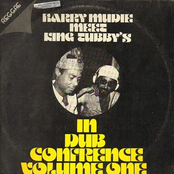
In Dub Conference Volume One
▥
Dub Conference Vol. 1
▥
Dub Conference Vol. 2
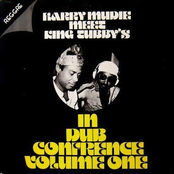
In Dub Conference Vol. 1
▥
Dub Conference Vol. 3
▥
In Dub Conference Volume One (from vinyl)
▥
In Dub Conference Vol. 2
▥
In Dub Conference Vol. 3
▥
In Dub Conference Volume One (Reissue, Remastered)
▥
Back To Black
▥
In Dub Conference Vol.1
▥
Dub Conference Vol.1