Loading details…

Artist
Guglielmo Ebreo da Pesaro
12+ albums
renaissanceClassicalitaliancomposerearly music
about
Guglielmo Ebreo da Pesaro (c. 1420 - c. 1484) was a Jewish Italian dancer and dancing master at some of the most influential courts in Renaissance Italy, including Naples, Urbino, Milan, and Ferrara. His byname Ebreo means simply ‘Hebrew.’ Not always used when referring to him, da Pesaro indicates that he was from the east-central town of Pesaro. Between October 1463 and May 1465, Guglielmo probably converted from Judaism to Roman Catholicism and took the name Giovanni Ambrosio.[1] He studied with Domenico da Piacenza (sometimes known as Domenico da Ferrara) in the 1440s, and is mentioned in Domenico's Liber ballorum (1460).[2] Around 1463, Guglielmo authored the treatise De pratica seu arte tripudii (On the Practice or Art of Dancing),[1] sometimes cited as Trattato dell' arte del ballare (Treatise on the Art of Dancing). In it, Guglielmo defends dancing as a noble art, emphasizing the important role of music. He also describes qualities necessary for dancers, including posture, musicality, style, and memory, and provides first-hand accounts of massive court celebrations in which he played a role. The treatise contains choreographies and music for thirty-six dances by Guglielmo and his contemporaries. His patron and friend Alessandro Sforza (Lord of Pesaro and brother of Francesco Sforza) convinced convert Guglielmo to Roman Catholicism. Alessandro Sforza was a very religious man, but perhaps also influenced Guglielmo ability to access the dignity of Knight (as happened,
top songs
albums
Oh Flanders Free: Music of the Flemish Renaissance
▥
La Spagna: A Tune Through Three Centuries
Renaissance Music at the Court of the Kings of Spain
Canti e Danze alla Corte Estense tra XV e XVI secolo
Chamber Music (Italian 15Th Century) - Piacenza, D. / Guglielmo Ebreo Da Pesaro / Dunstable, J. / Harrison, I. (Les Haulz Et Les Bas)
Luz del Alva
Art & Music: Raphael - Music of His Time
Music of the Sephardim and Renaissance Spain
▥
Dances -- A Renaissance Revel
▥
Falla con misuras - 15th-17th Century Italian Chamber Music
In Recital at Tulle Cathedral
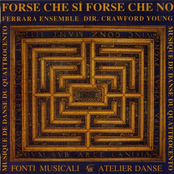
Forse Che Si, Forse Che No