Loading details…

Artist
Glagolitic Chant
12+ albums
early musicgregorian chantearly music of serbiamedieval musicEarly Poliphony
about
Glagolitic singing has been preserved mainly through oral transmission in the course of ten centuries as specific Croatian liturgical singing using the Western Roman Church rite. Glagolitic singing is unique due to the position of Glagolitism in the organization of the Western Church as well as the cultural tradition of three languages (Old Church Slavonic, Latin, Croatian) and three scripts (Glagolitic, Croatian Cyrillic and Latin). Its chant repertory shows Byzantine, Aquileian, Gregorian and other West European sacral influences (as in the case of the Bohemians, with as many as three co-developing phases) and distinguished, in particular, by layers of folk music expression. Glagolitic singing lasted parallel with the Latin tradition: from the 9th to the 17th centuries in the narrower sense, and up to the 20th century in wider terms. Different traditions of church music including secular folk music, church songbooks by known and unknown redactors all could have played a role in the creation of the musical characteristics of Glagolitic singing. Today Glagolitic chant is studied on the basis of documents (the most important dating from 1248 and 1252), liturgical roles in rubrics, rare note records, but mostly sound recordings and transcriptions (mgt. from the beginning of the 20th century). Geographically, it spread to Istria, the islands (Krk, Cres, Lošinj, Rab, Pag) and the Kvarner hinterland, Dalmatia (with the islands of Hvar, Korčula, Brač, Šolta, Vis) all the way to Du
top songs
albums
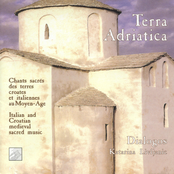
Terra Adriatica
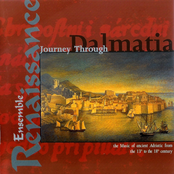
Journey Through Dalmatia

Tondal's Vision
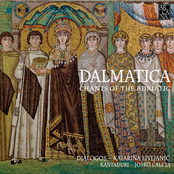
Dalmatica: Chants Of The Adriatic
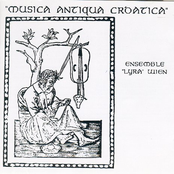
Musica Antiqua Croatica
From X-XII Centuries Yugoslavian Manuscripts
Monodic Music In Croatia From 10th To 12th Century
▥
Muzika Starog Jadrana
Barlaam & Josaphat: Buddha, A Christian Saint?
Heretical Angels: Rituals Of Medieval Bosnia And Herzegovina
▥
Early Church Music XV-XVIII century
Carolus IV: Rex Et Imperator