Loading details…

Artist
Giovanni Battista Martini
12+ albums
musicologistbaroquecomposerClassicalAll
about
Giovanni Battista Martini, also known as Padre Martini (April 24, 1706 – August 3, 1784) was an Italian musician. Martini was born at Bologna. His father, Antonio Maria Martini, a violinist, taught him the elements of music and the violin; later he learned singing and harpsichord playing from Padre Pradieri, and counterpoint from Antonio Riccieri and Giacomo Antonio Perti. Having received his education in classics from the fathers of the oratory of San Filippo Neri, he afterwards entered upon a noviciate at the Franciscan monastery at Lago, at the close of which he was received as a Minorite on September 11, 1722. In 1725, though only nineteen years old, he received the appointment of chapel-master in the Franciscan church at Bologna, where his compositions attracted attention. At the invitation of amateurs and professional friends he opened a school of composition at which several celebrated musicians were trained; as a teacher he consistently declared his preference for the traditions of the old Roman school of composition. Padre Martini was a zealous collector of musical literature, and possessed an extensive musical library. Burney estimated it at 17,000 volumes; after Martini's death a portion of it passed to the Imperial library at Vienna, the rest remaining in Bologna, now in the Museo Internazionale della Musica (ex Civico Museo Bibliografico Musicale). Most contemporary musicians speak of Martini with admiration, and Leopold Mozart consulted him with regard to the
top songs
albums
▥
Plasir D Amour
▥
Alleluia
▥
Martini (arr. Alain): Toccata
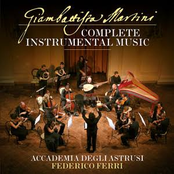
Martini: Complete Instrumental Music
▥
Trumpet Voluntary
▥
Martini: Complete Organ Music
▥
Trompete & Orgel "Festlich-besinnlich"
▥
Organ Meditation
▥
Rendezvous With Richard Tauber
▥
The Art of the Trumpet
▥
Popular pieces for Trumpet and Organ
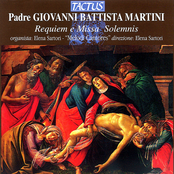
Martini: Requiem - Missa Solemnis