Loading details…

Artist
Frank Martin
12+ albums
Classicalcontemporary classicalcomposerswiss20th Century
about
Frank Martin (15 September 1890 – 21 November 1974) was a Swiss composer, who lived a large part of his life in the Netherlands. He was born in Geneva, the tenth and last child of Charles Martin, a pastor. Before he started school, he was already playing the piano and improvising. At nine, he was composing complete, fully formed songs, without having had any instruction in song forms or harmony. A performance of Bach's St. Matthew Passion which he heard at the age of twelve left upon him an ineradicable impression, and Bach became his true master. He studied mathematics and physics at the University of Geneva for two years, working on composition and studying piano with Joseph Lauber on the side. From 1918 to 1926, he lived in Zürich, Rome, and Paris. The compositions of this period show him searching for his own musical language. In 1926, he founded the Société de Musique de Chambre de Genève, which he directed as pianist and harpsichordist for ten years. During this time, he also taught theory and improvisation at the Jaques-Dalcroze Institute and chamber music at the Geneva Conservatoire. He was director of the Technicum Moderne de Musique from 1933 to 1940 and president of the Association of Swiss Musicians from 1942 to 1946. He moved to the Netherlands in 1946 to find more time for his composing than he could obtain while in Switzerland, where he was involved in too many other activities. For ten years he lived in Amsterdam, and finally settled in Naarden. From 195
top songs
albums
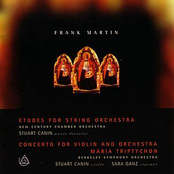
Etudes For String Orchestra, Concerto For Violin And Orchestra
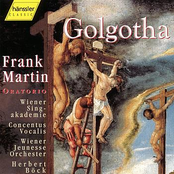
Golgotha
▥
Frank Martin
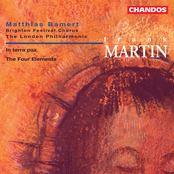
Martin: In terra pax & Les quatre temperaments
▥
Requiem for soloists, chorus, orchestra & organ
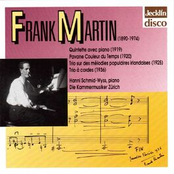
Frank Martin: Musique de Chambre
▥
Choral Works
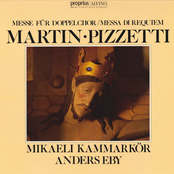
Martin: Mass / Pizzetti: Requiem
▥
Frank Martin: Polyptyque – Pavane couleur du temps – Petite Symphonie concertante
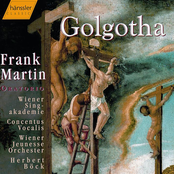
Martin: Golgotha
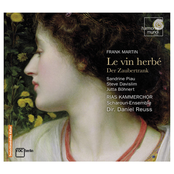
Martin: Le Vin herbé
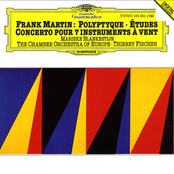
Martin: Concerto For 7 Wind Instruments (1949); Polyptyque pour violon solo et deux petits orchestres à cordes (1972-73); Études pour orchestre à cordes (1955-56)