Loading details…
F
Artist
Fernando Gelbard
12+ albums
jazzlatinpianoinstrumentalcomposer
about
The whatmusic.com interview... the didian concept of pleasure in jazz When 'Didi' was recorded in Buenos Aires during August 1974, five Argentineans and one Uruguayan landed at Music Hall recording studios. Their leader was Fernando Gelbard, an Argentinean pianist, flautist, composer and record producer. 1974 was a time when neither synthesizers nor Fender Rhodes pianos were usual in Buenos Aires. Nevertheless, Fernando Gelbard chose to forgo his acoustic instruments in making 'Didi', thus becoming the first musician in Argentina to make a jazz record exclusively on the new electronic instruments. This is a pioneering project in more than one way. Through the use, for instance, of two percussionists in all the tunes - with the the exception of a short piece recorded entirely with the Moog synthesizer. I don't think many Argentinean jazz musicians of the time relied so much on electronic instruments and percussion. There is also a saxophone player on three of the tunes and there is a drummer, but only on one track. Gelbard's work of 1974, with its all-pervading percussion and rhythms from Latin America or, better, Latin Afro-America, would be labelled today world music or world jazz. World jazz or whatever you call it, it is nonetheless a jazz work firmly rooted in be-bop and post-bop with a strong electronic and Latin jazz side to it. Latin? What kind of Latin exactly? Two bossa nova tunes in it: 'Didi', (named after Gelbard's wife), with it's catchy melodic line, an
top songs
albums
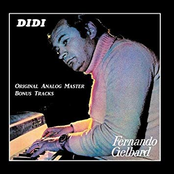
Didi (Original Analog Master, Bonus Tracks)
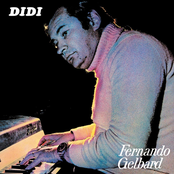
Didi
▥
Music For Jazz Dancers
▥
Ouelele
▥
Various Ouelele
▥
Tarde en ION

Ouelele - Another Collection Of Modern Afro Rhythms
▥
Alevacolariea Dimensions
▥
Rodríguez Peña Blues / Les Feuilles Mortes
▥
Alevacolariea
▥
Folklonika!
▥
Ouelele (Another Collection Of Modern Afro Rythms)